Relationship loss
Relationship loss can take many forms. It might mean the breakdown of a marriage or long-term relationship, separation from a partner, losing regular contact with children, or the death of someone important.
Whatever the circumstances, losing an important relationship can have a significant impact on mental health. It can bring feelings of grief, loneliness, anger, rejection, guilt and uncertainty, while also changing a person’s sense of identity, routine, purpose and future.
Relationship loss can be particularly difficult for men who feel they are expected to stay strong, keep going and deal with difficult emotions on their own. Some may find it hard to talk about what they are experiencing or ask for support, leaving them more isolated at a time when connection matters most.
The loss of a relationship can also bring major changes to everyday life, family relationships and a sense of belonging. When grief and emotional distress are combined with isolation, conflict, financial pressures or other challenges, some men may begin to feel trapped or unable to see a way forward.
For some, this can contribute to suicidal thoughts and increase the risk of suicide. Recognising these signs early and helping men talk about what they are going through can make it easier to access support before things reach crisis point.

1.6x
more likely for separated/divorced men to experience suicidal thoughts compared with married men.
73%
more likely for recently divorced men to attempt suicide compared with married men.
3x
more likely for divorced men to die by suicide compared with married men.
Signs someone may be struggling
When a relationship ends, the effects can show up in different parts of daily life. Many men continue to focus on practical responsibilities or try to carry on as normal, even when things feel overwhelming underneath.
Everyone responds differently to to the loss of important relationships, but some common signs that a man may be struggling include:
- Withdrawing from family, friends, or social activities.
- Losing interest in hobbies or things they used to enjoy.
- Frequently talking about feelings of failure, rejection, or hopelessness.
- Increased anger, irritability, or emotional outbursts.
- Neglecting personal appearance or self-care.
- Difficulty concentrating at work or carrying out everyday tasks.
- Becoming preoccupied with the relationship or unable to accept it has ended.
- Appearing overwhelmed by financial, legal, or housing concerns.
- Talking about feeling like a burden or having no future.
- Changes in sleep patterns (insomnia or sleeping more than usual).
- Changes in appetite or weight.
- Increased use of alcohol, drugs, gambling, or other coping behaviours.
- Restlessness or feeling constantly on edge.
Types of relationship loss
Relationship loss can take many forms. The circumstances may be very different, but each can involve losing an important source of love, connection, companionship or support. It’s important to remember that different types of loss can bring similar feelings of grief, loneliness and uncertainty.
Relationship breakdown
Separation, divorce or the end of a marriage or long-term relationship.
Loss of contact
Losing regular or meaningful contact with children, family members, a partner or close friends.
Bereavement
Losing someone important through death, including a partner, family member or close friend.
Bereavement by suicide
Losing someone to suicide can bring a particularly complex form of grief. People may experience intense guilt, anger, shock, unanswered questions or feelings of responsibility, alongside the pain of losing someone they love. Research shows that men bereaved by suicide can face an increased risk of suicide themselves, alongside a greater risk of mental health difficulties.
Real stories
These stories from well-known men show that even after relationship breakdowns and mental health struggles, recovery is possible and support can make a difference.

Rylan Clark, British TV presenter
Rylan Clark has spoken about the impact of his divorce from Dan Neal and the severe effect it had on his mental health. He experienced intense anxiety and depression, along with physical symptoms including temporarily losing his speech and vision, which he described as “stroke-like” episodes.
He has said the breakdown of his marriage led to a period where he took time away from work to recover, later reflecting that he had reached emotional and psychological overload.
Rylan has since spoken about the importance of slowing down, seeking support, and prioritising self-care during difficult periods following relationship breakdown.

Ryan Phillippe, American actor
Ryan Phillippe has spoken about the impact of his divorce from Reese Witherspoon, describing it as one of the most difficult periods of his life.
He said the separation led to a serious period of depression and low mood, where he struggled to cope day to day and found it hard to get out of bed for several months.
He has described divorce as an emotionally overwhelming experience, but also noted that, over time, things gradually improved as he processed the loss and adjusted to life after the relationship.
TRUUMAN Podcast
In this episode of The TRUUMAN Podcast, researcher Michael Wilson explains how intimate partner relationship breakdown is a major trigger for declining mental health and increased suicide risk in men. He highlights how separation can lead to isolation, loss of identity, and emotional crisis, while also showing how emerging research is shaping more targeted and effective suicide prevention approaches for men.
Are you struggling?
If your relationship has ended, or you have lost someone important to you, it is important to remember that the intense emotions you are experiencing right now will not last forever. Grief, anger, loneliness, guilt, and anxiety are common responses to loss, but you do not have to face them alone.
There are practical steps you can take to protect your mental health and begin moving forward:
- Stay connected with trusted friends, family members, colleagues, or support groups. Isolation can make emotional pain worse.
- If you are a father, focus on maintaining positive involvement in your children’s lives and seek support with co-parenting challenges if needed.
- Look after your physical and mental health by maintaining a routine, prioritising sleep, staying active, eating well, and limiting alcohol or drug use.
- Give yourself time to grieve. It is normal to experience a range of emotions after a relationship ends.
- Create a safety plan if you are experiencing thoughts of self-harm or suicide, including people to contact, coping strategies, and emergency support options.
- Seek professional support through counselling, therapy, men’s groups, or relationship recovery services.
Relate
Support for relationship difficulties, separation, and moving on after a relationship ends. Free online chat with a trained counsellor available.
- Visit the website
- 0300 100 1234 (England)
- 0300 003 2340 (Wales)
Family Lives
Advice and support for separation, divorce, co-parenting, and family relationships. Support available seven days a week.
- Visit the website
- 0808 800 2222
Cruse Bereavement Support
Support for anyone affected by bereavement and grief. Trained volunteers offer a safe space to talk about how you’re feeling and help you find ways to cope.
- Visit the website
- 0808 808 1677
Survivors of Bereavement by Suicide (SOBS)
Peer-led support for adults bereaved by suicide, including a national support line and local and virtual support groups.
- Visit the website
- 0300 111 5065
Stay Alive app
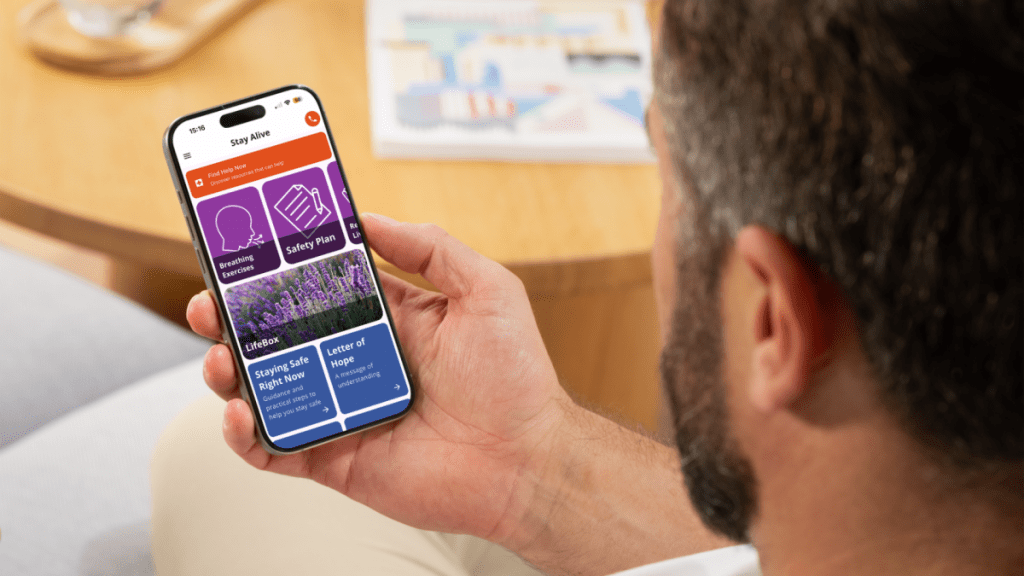
Whether you’re struggling with your mental health or suicidal thoughts, or supporting someone else, our NHS-recommended Stay Alive app offers practical tools and access to over 800 resources to help you stay safe.

Grounding techniques
Access breathing exercises and grounding techniques that can help deal with overwhelming anxiety, pain or emotions.

Safety plan
Create a Safety Plan to recognise warning signs early and outline the steps you can take if a suicidal crisis is beginning or escalating.

LifeBox
Upload photos and memories to your LifeBox. These reminders can help ground you, bring comfort and offer a moment of calm when you need it most.
Stay Alive app
All of these tools and more are available on our Stay Alive app, making them easy to access when you or someone you are worried about is struggling.
Did you know? Our free app was the first in the UK, has won multiple awards and is helping a million people all over the world. Please consider a donation (whatever you can afford) to continue to develop the maintenance and development of our app.
Story of hope - Fraser
Fraser’s story is a powerful reminder that even through unimaginable grief, support can help us find a way forward and begin to see hope again.
“Although hard to come by, finding joy and lightness is beginning to creep back into our lives nowadays. Our journey in grieving for Karen is for life, however, the light of ‘future life’ is starting to shine into the tunnel now.”
Are you worried about someone?
The loss of a relationship can be particularly difficult for men, especially when they are living alone for the first time, facing divorce proceedings, or struggling with reduced contact with their children.
You can support someone by:
- Listening without judgement.
- Encouraging them to talk about how they are feeling.
- Helping them stay connected to family, friends, and support networks.
- Encouraging healthy routines and professional support.
- Checking in regularly, especially if they live alone.
- Supporting them to maintain positive involvement with their children where possible.
- Looking out for warning signs such as increased drinking, isolation, hopelessness, or talk of suicide.
- If you are worried that they are feeling overwhelmed and having suicidal thoughts, our Ask now, save lives page has guidance on how to start a conversation. Asking someone if they’re suicidal could protect them.
Stay Alive app
Our award-winning Stay Alive app provides additional information on how to keep someone safe, including warning signs, practical steps, things to avoid and more.
Learn more about how to approach a conversation about suicide and support someone who may be struggling.

Gain the skills to support men
The end of a relationship can feel devastating, particularly when it involves separation from children, loss of a family home, or uncertainty about the future. However, many men go on to rebuild fulfilling lives, maintain strong relationships with their children, and develop new sources of meaning and connection.
Men's Suicide Prevention Hub
Sources
Relationship breakdown and suicide risk
Relationship breakdown is a major life stressor linked to increased suicide risk in men – Samaritans, Suicide Risk Factors: Relationship Breakdown, 2021.
Men are less likely than women to receive emotional support following separation – Romantic Relationships Matter More to Men than to Women | Behavioral and Brain Sciences | Cambridge Core
Research shows that men bereaved by suicide can face an increased risk of suicide themselves, alongside a greater risk of mental health difficulties. – Impacts of suicide bereavement on men: A systematic review
Boxed statistics
1.6 times more likely to experience suicidal ideation in separated or divorced men than married men. – Suicidality in men following relationship breakdown: A systematic review and meta-analysis of global data – PubMed
73% more likely to attempt suicide in recently divorced men than married men. – Suicidality in men following relationship breakdown: A systematic review and meta-analysis of global data – PubMed
more likely for divorced men to die by suicide compared with married men. – Who is most at risk of suicide? – Office for National Statistics
Image Credits
Rylan Clark by ESC Discord – https://www.flickr.com/photos/escdiscord/53640117081/, CC BY-SA 2.0, https://commons.wikimedia.org/w/index.php?curid=147197103
Ryan Phillippe By David Shankbone – Own work, CC BY 3.0, https://commons.wikimedia.org/w/index.php?curid=14995443