Online harms
Online harms include harmful or distressing experiences on the internet, such as harassment, hateful content, violent imagery, misinformation, self-harm or suicide‑related content, and more. While many online spaces provide connection, learning, and support, they can also amplify risks to mental health.
For men, the risks around online harms may aggravate vulnerability, isolation, and suicidal thinking. Exposure to extremist content or manipulation through social media algorithms can also contribute to radicalisation or toxic behaviours. As online platforms become central to daily life, it’s crucial to understand the risks men face and promote safer, healthier digital environments.
Risks
Men are increasingly exposed to online harms that can affect their mental health and wellbeing. Recent survey results show that 41% of UK men have encountered misinformation online, while two-thirds of UK adults report seeing content they consider harmful. Constant exposure to negative and unregulated content without proper support can contribute to feelings of isolation, anxiety, depression, and increased risk of suicidal thoughts or behaviours.
Men in the UK report frequent encounters with hate speech, violent imagery, and online threats. Repeated exposure to harassment or abusive messages can increase stress, anxiety, and a sense of vulnerability, particularly for those who feel pressure to manage it alone rather than seek support.
Some men engage with online communities promoting extreme or rigid ideas about masculinity, relationships, or society. While these spaces can provide a sense of belonging, certain forums may encourage toxic beliefs, reinforce feelings of hopelessness, and heighten vulnerability to suicidal thoughts.
Misinformation, targeted harassment, and emerging technologies like deepfakes can create confusion, fear, or distrust. For men already experiencing stress or isolation, repeated exposure to misleading content may intensify anxiety and reinforce negative beliefs about the world or themselves.
Keeping safe online
If you’re worried about someone’s behaviour or fear their online habits may be affecting their mental health, the most important step is to open up a supportive, non-judgemental conversation. You don’t need to have all the answers, just being present and willing to listen can be helpful.
Take regular breaks
Encourage stepping away from screens throughout the day to reduce stress, prevent fatigue, and support overall mental wellbeing.
Protect privacy
Help him use strong passwords, enable two-factor authentication, and consider carefully what personal information is shared online.
Manage harmful content
Support him in blocking, reporting, or muting accounts that share abusive, threatening, or distressing material.
Limit late-night screen time
Suggest reducing device use before bed to protect sleep, which plays a key role in mood and mental health.
Choose positive communities
Encourage engagement in online spaces that are supportive, respectful, and focused on constructive conversation.
Be critical of information
Remind him to question messages, posts, or advice online, especially from unknown sources, and to check facts before accepting or sharing them.
Reach out for support
Reinforce that it’s okay to speak with trusted friends, family, or professional services rather than handling distress alone.
Below are various helplines and contacts for staying safe online.
The Cyber Helpline
Free, expert help for victims of cybercrime, digital fraud & online harm.
Revenge Porn Helpline
Supports individuals affected by non-consensual sharing of intimate images or videos.
- Visit the website
- 0345 6000 459
R;pple
Digital tools providing online support and resources to people searching for self-harm or suicide content, promoting safety and positive mental health.
Stay Alive app
Whether you’re struggling with suicidal thoughts yourself or supporting someone else, our NHS-recommended Stay Alive app offers practical tools and access to over 800 resources to help you stay safe.

Grounding techniques
Access breathing exercises and grounding techniques that can help deal with overwhelming anxiety, pain or emotions.

Safety plan
Create a Safety Plan to recognise warning signs early and outline the steps you can take if a suicidal crisis is beginning or escalating.

LifeBox
Upload photos and memories to your LifeBox. These reminders can help ground you, bring comfort and offer a moment of calm when you need it most.
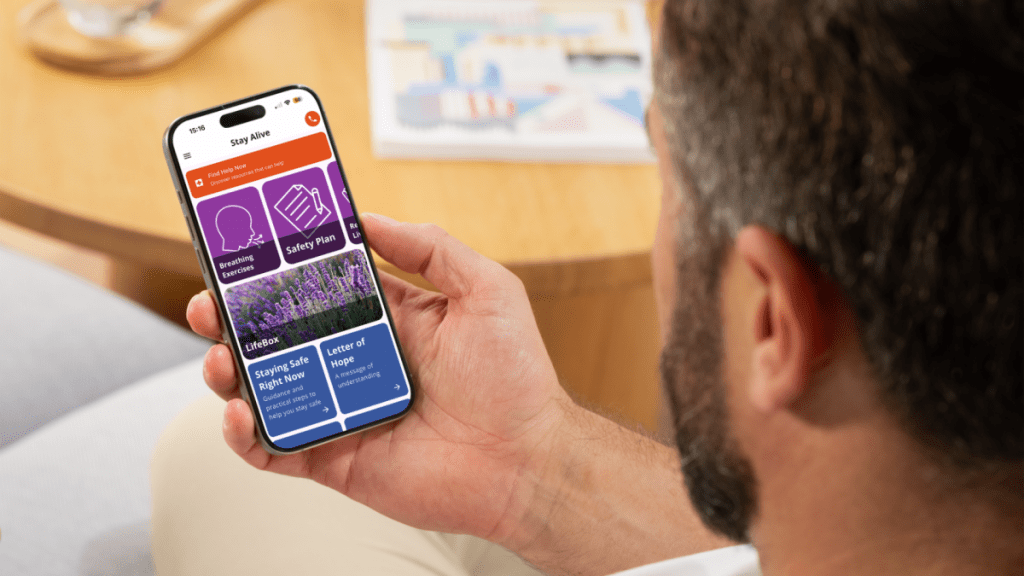
Stay Alive app
All of these tools and more are available on our Stay Alive app, making them easy to access when you or someone you are worried about is feeling overwhelmed.
Did you know? Our free app was the first in the UK, has won multiple awards and is helping a million people all over the world. Please consider a donation (whatever you can afford) to continue to develop the maintenance and development of our app.

Gain the skills to support men
Men's Suicide Prevention Hub

Sources
Recent survey results show that 41% of UK men have encountered misinformation online – Ofcom, Online Nation 2024
Two-thirds of UK adults report seeing online content they consider harmful – The Alan Turing Institute, Tracking experiences of online harms and attitudes towards online safety interventions