Domestic abuse
Domestic abuse against men refers to patterns of controlling, threatening, humiliating, or violent behaviour experienced from a partner or family member. This can include emotional abuse, coercive control, financial restriction, sexual abuse, and physical violence. While often hidden or minimised, domestic abuse has a profound impact on men’s mental health and significantly increases suicide risk.
Men who experience domestic abuse often suffer in silence. Social expectations can make it difficult to recognise what is happening, and many men fear they will not be believed, blamed, or ridiculed if they disclose abuse. Others worry about losing contact with their children or facing legal consequences if they seek help.
Many may question whether what they are experiencing “counts” as abuse, or feel unsure whether it is serious enough to seek help. As a result, men may remain in abusive situations for long periods, experiencing ongoing stress, fear, isolation and emotional harm, which can increase the risk of suicidal thoughts.
Recognising these patterns and seeking support early can help protect mental health and reduce risk.
3 to 5
men every week die by suicide due to domestic abuse as estimated by The Mankind Initiative.
21%
of male victims fail to tell anyone they are a victim of partner abuse.
1 in 5
men in 2024/25 said they have been a victim of domestic abuse in their lifetime.
Examples of domestic abuse
Domestic abuse is not always physical or obvious. It can be psychological, emotional, sexual, or financial, and often involves a pattern of behaviour over time rather than isolated incidents. It may also include periods of calm or affection, which can make it harder to recognise, and controlling behaviour can become normalised over time.
Many men do not initially recognise what they are experiencing as abuse, as it can be disguised as jealousy, conflict, stress, or “normal” relationship arguments. Here are some examples of the different types of domestic abuse.
- Hitting, punching, slapping and kicking.
- Using objects to hurt you, sometimes in the groin.
- Attacking you with knives or other sharp objects.
- Pouring boiling water on you.
- Attacking you when you’re asleep.
- Humiliating, threatening or degrading you.
- Putting you down in front of other people.
- Calling you names.
- Playing mind games.
- Giving you the ‘silent treatment’.
- Ignoring you.
- Telling you you’re not the father of their children.
- Blaming you for the abuse.
- Gaslighting by using lies, denial, contradiction, false information and manipulation to discredit your memory, perception and sanity.
- Pressuring you to have sex or to engage in sexual acts, hurting you during sex, pressuring you to have unprotected sex.
- Forcing a partner to look at pornographic material; forcing them to perform sexual acts they do not wish to; forcing them to have sex when they don’t want it; or forcing them to have sex with other people.
- Keeping you out of education or work, or limiting your working hours.
- Taking, stealing, or controlling your money.
- Restricting your access to your bank accounts.
- Refusing to contribute to household costs, or spending money needed for essentials on themselves.
- Putting credit cards and loans in your name while keeping savings and the house in their name.
- Building up debt in your name, including without your knowledge.
Signs of domestic abuse
Domestic abuse can affect mental health and increase the risk of anxiety, depression, and suicidal thoughts. Recognising the signs early can help people access support and prevent problems from worsening.
Warning Signs of Physical Abuse
- Regularly experience unexplained injuries and describe them as accidents (for example, “I tripped over…”).
- Often miss work, appointments, or social events without a clear or consistent explanation.
- Wear clothing intended to conceal injuries or marks, such as long sleeves in warm weather or sunglasses indoors.
Warning Signs of Psychological Abuse
- Appear fearful of, or overly eager to please, their partner.
- Frequently mention their partner’s anger, jealousy, or controlling behaviour.
- Frequently check in with their partner to report their whereabouts and activities.
- Are regularly belittled, criticised, or humiliated (for example, “he is a useless, weak man”).
- Experience threats of false allegations being made against them.
- Experience children being encouraged to reject or turn against them (often referred to as parental alienation).
- Show significant changes in personality, such as becoming withdrawn or less confident.
- Neglect their appearance or personal hygiene.
- Appear tired, unwell, or experience sleep problems or insomnia.
- Experience anxiety, depression, or suicidal thoughts.
- Begin or increase use of alcohol or drugs as a coping mechanism.
Warning Signs of Sexual Abuse
Many indicators of sexual abuse overlap with those of physical and psychological abuse including:
- Appear fearful of their partner or previous partner.
- Regularly experience unexplained injuries and describe them as accidents (for example, “I tripped over…”).
- Show significant changes in personality, such as becoming withdrawn or less confident.
- Neglect their appearance or personal hygiene.
- Appear tired, unwell, or experience sleep problems or insomnia.
- Experience anxiety, depression, or suicidal thoughts.
- Begin or increase use of alcohol or drugs as a coping mechanism.
Warning Signs of Financial Abuse
Although some of these signs may indicate financial hardship, they can also suggest economic abuse, particularly when accompanied by fear, anxiety, isolation, or controlling behaviour from a partner.
- Feel they must seek permission from their partner before spending money.
- Have no access to a joint bank account, or their partner controls all financial matters.
- Only use cash and do not have access to bank cards.
- Ask to borrow money for basic items such as food, toiletries, or household essentials.
- Borrow money to repay debts or loans taken out in their name by their partner.
- Work multiple jobs to support their partner’s lifestyle.
- Avoid social activities due to lack of money or restrictions placed on spending.
- Are unable to access medication, mobility aids, or care support needed for a disability or long-term health condition.
- Experience noticeable changes in living conditions or personal appearance due to financial restriction.
Real stories
These stories from well-known men show that even after domestic abuse and mental health struggles, recovery is possible and support can make a difference.

Sir Patrick Stewart, British actor
Sir Patrick Stewart has spoken openly about growing up in a home affected by domestic abuse and the impact it had on his family. As an ambassador for Refuge, he raises awareness of domestic violence, challenges stigma, and encourages people to speak out and seek support, highlighting the importance of breaking the silence surrounding abuse.

Tyler Perry, American actor and playwright
Tyler Perry has spoken openly about the physical, emotional and sexual abuse he experienced during childhood and its lasting impact on his life. Through sharing his experiences, he highlights the importance of healing, seeking support and setting healthy boundaries, offering hope to others affected by childhood trauma.
Are you struggling?
Living with domestic abuse can have a significant impact on your mental health, confidence and overall wellbeing. Taking steps to access support can help you regain control, improve your safety, and reduce feelings of isolation, anxiety and hopelessness.
You are not weak for asking for help. Abuse often happens in silence, but reaching out is a sign of strength and self-protection. It does not make you weak, unmanly or a failure, it means you are taking steps to protect your safety and wellbeing.
There are a number of things you can do to help yourself:
- Tell a trusted friend or family member what is happening so that you have support and do not feel alone.
- Speak to your GP or another healthcare professional about how the abuse is affecting you.
- Leave the relationship if it is safe and possible to do so.
- Keep a diary of incidents, including dates, times and any witnesses, and take photographs of injuries where appropriate.
- Report incidents to the police, including criminal damage, threats, harassment and violence.
- Make a safety plan to help you prepare for an emergency situation.
- Keep important documents, keys, medication, a phone and essential belongings accessible in case you need to leave quickly.
- Avoid retaliation and move to a safe place if possible.
In an emergency, call 999. If you cannot speak, press 55 when prompted.
The following services can provide practical support, advice, and emotional help:
ManKind Initiative
Free helpline offering emotional support, practical information, safety planning, and referrals to local services for male victims of domestic abuse.
- Visit the website
- 0808 800 1170
Men's Advice Line
Confidential helpline and information service offering emotional support, practical guidance and signposting for men experiencing domestic abuse.
- Visit the website
- 0808 801 0327
Refuge - Support for men
General support, information, and signposting for men to specialist domestic abuse services.
Galop
Specialist helpline and support service for LGBT+ people experiencing domestic abuse, violence, or controlling relationships.
- Visit the website
- 0800 999 5428
Contact your GP
They will help you get support from the right services and will sometimes take appointments over the phone.
- Find your GP contact details
- If your GP practice is closed or unavailable, call NHS 111
- Visit the NHS 111 website
Stay Alive app
Whether you’re struggling with your mental health or suicidal thoughts, or supporting someone else, our NHS-recommended Stay Alive app offers practical tools and access to over 800 resources to help you stay safe.
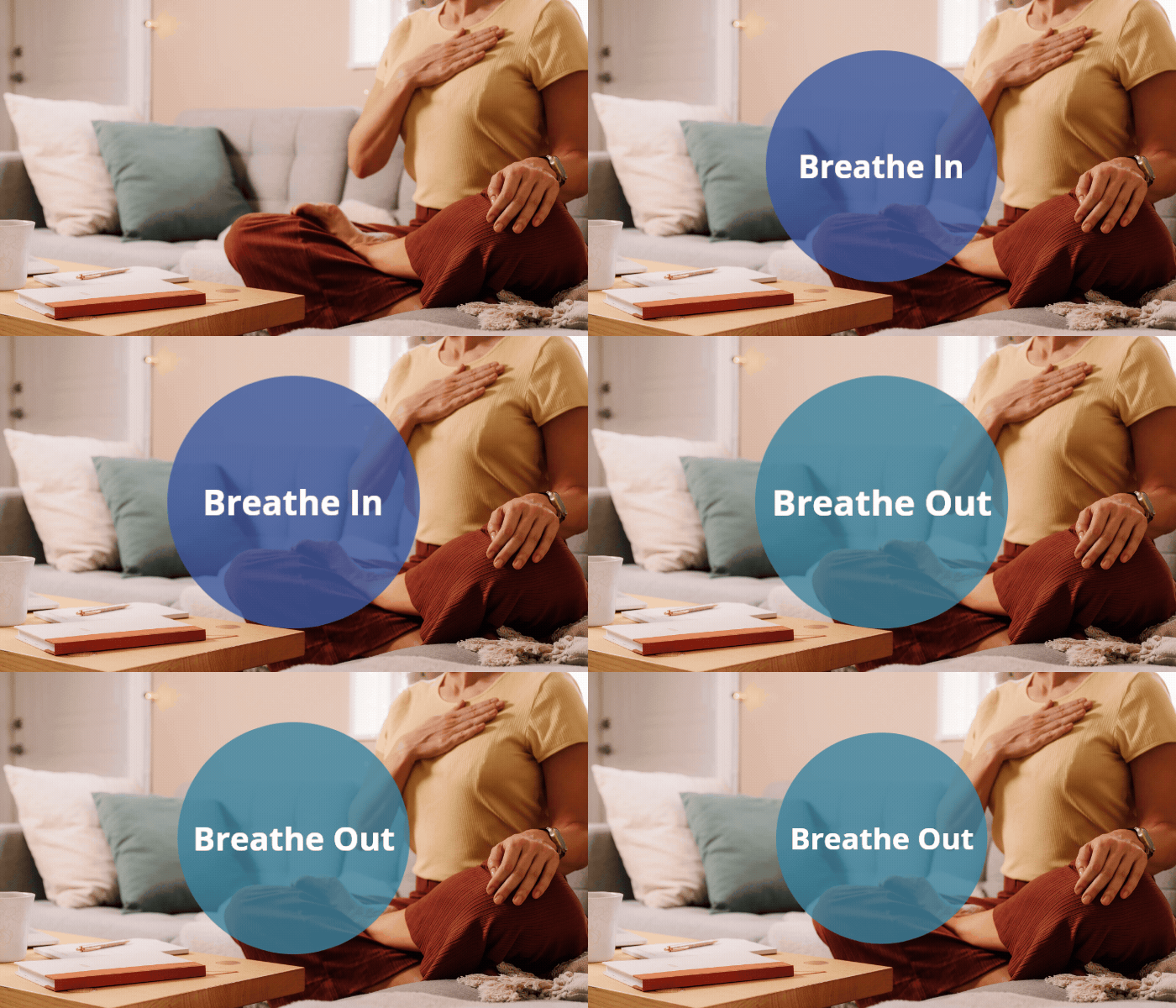
Grounding techniques
Access breathing exercises and grounding techniques that can help deal with overwhelming anxiety, pain or emotions.

Safety plan
Create a Safety Plan to recognise warning signs early and outline the steps you can take if a suicidal crisis is beginning or escalating.

Lifebox
Upload photos and memories to your LifeBox. These reminders can help ground you, bring comfort and offer a moment of calm when you need it most.
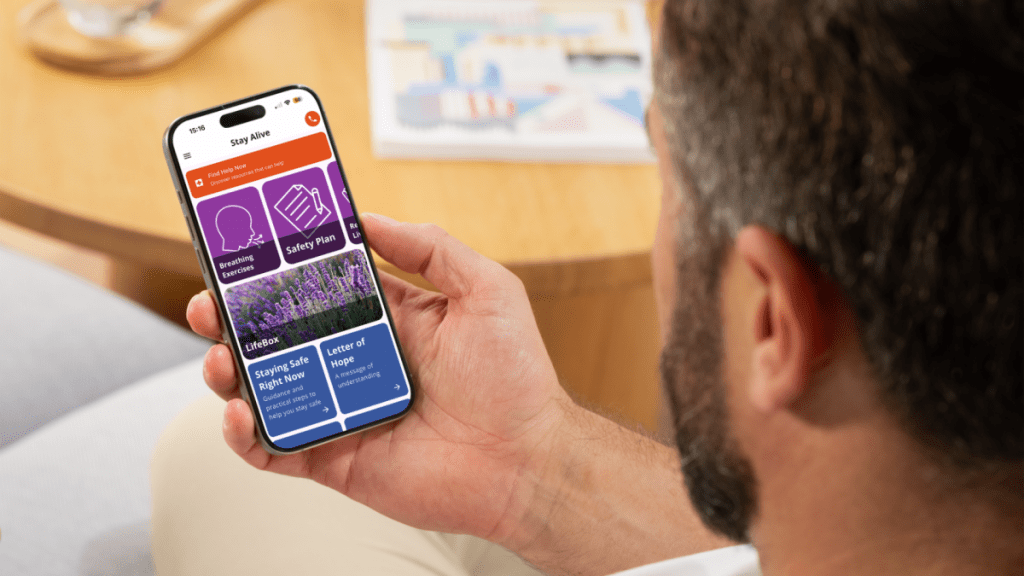
Stay Alive app
All of these tools and more are available on our Stay Alive app, making them easy to access when you or someone you are worried about is struggling.
Did you know? Our free app was the first in the UK, has won multiple awards and is helping a million people all over the world. Please consider a donation (whatever you can afford) to continue to develop the maintenance and development of our app.
Story of hope - Rob
This is a powerful reminder that recovery is possible, that abuse does not define you, and that there is a future beyond the pain. This is Rob’s story of hope.
“Now, when I look back, I not only see the struggle, but the resilience that brought me through to the other side. This is indeed my story of hope, born from surviving “Male” domestic abuse, and from finding a future where I can finally breathe free.”
Are you worried about someone?
It can be hard to talk about how we are struggling but listening, offering support, and encouraging someone to seek help can make a real difference.
Here are some ways you can support someone you are worried about:
- Notice possible signs such as fear of a partner, withdrawal, anxiety, or changes in behaviour or independence.
- Listen carefully and take what they say seriously, even if they are unsure or minimise what is happening.
- Reassure them they are not to blame and that abuse is never acceptable.
- Focus on safety and avoid confronting the abuser or doing anything that could increase risk.
- Encourage contact with specialist domestic abuse services for confidential support.
- Support them to seek help safely and at their own pace.
The following organisations offer advice, guidance, and practical support for helping someone affected by domestic abuse.
Spotting the signs
ManKind Initiative have shared some telltale signs and symptoms of emotional, psychological or physical abuse.
Supporting someone at work
It’s not for employers to ‘solve’ the problem, but Next Chapter explain how you can enable employees to access professional support.
Understand their situation
These real stories from Respect can help understand the different situations someone may be in.
Stay Alive app
Our award-winning Stay Alive app provides additional information on how to keep someone safe, including warning signs, practical steps, things to avoid and more.
Learn more about how to approach a conversation about suicide and support someone who may be struggling.

Gain the skills to support men
Whether you’re experiencing domestic abuse yourself or supporting someone who is, remember that help is available. Small steps, practical support, and open conversations can make a real difference, and no one has to face these challenges alone.
Men's Suicide Prevention Hub

Sources
Domestic abuse and men’s mental health
Domestic abuse includes patterns of controlling, coercive, threatening, humiliating or violent behaviour, including emotional, financial, sexual and physical abuse, perpetrated by a partner or family member – UK Government, Statutory Definition of Domestic Abuse, Domestic Abuse Act, 2021.
Men experience domestic abuse, including coercive control and psychological abuse, though it is often underreported and minimised – Office for National Statistics, Domestic Abuse in England and Wales Overview, 2023.
Men who experience domestic abuse often report shame, fear of disbelief and concerns about masculinity, which can delay disclosure and help-seeking – Mankind Initiative, Men’s Experiences of Domestic Abuse, 2020.
Psychological and emotional abuse, including monitoring, manipulation and constant criticism, are commonly reported by male victims of domestic abuse – Hester et al., Men’s Experiences of Domestic Abuse in the UK, University of Bristol, 2013.
Financial control and isolation from friends and family are recognised tactics of abuse used against male victims – Refuge and Respect, Economic Abuse Evidence Review, 2020.
Fear of losing contact with children or facing legal consequences is a significant barrier to help-seeking among abused men – Families Need Fathers and Mankind Initiative, Barriers to Disclosure for Male Victims of Domestic Abuse, 2019.
Men experiencing domestic abuse may remain in abusive relationships for extended periods due to stigma, fear and lack of appropriate support – SafeLives, The Hidden Victims: Male Survivors of Domestic Abuse, 2021.
Recognising Abusive Behaviours | Men’s Advice Line UK
Signs of Domestic Abuse & Violence · Information Guides · NCDV
Spotting the signs: A guide for friends and family – Surviving Economic Abuse
Domestic abuse and suicide risk
Exposure to domestic abuse significantly increases the risk of suicidal ideation and suicide attempts – Devries et al., Intimate Partner Violence and Suicidal Behaviour: A Systematic Review, PLOS Medicine, 2013.
People who experience domestic abuse are around twice as likely to attempt suicide compared with those who have not experienced abuse – Devries et al., Violence Against Women and Mental Health Outcomes, PLOS Medicine, 2011.
Domestic abuse is frequently identified as a contributing factor in suicides among adults, particularly where abuse is chronic or combined with isolation and coercive control – National Confidential Inquiry into Suicide and Safety in Mental Health, Suicide by Middle-Aged Men, University of Manchester, 2017.
Boxed statistics
3 to 5 men every week die by suicide due to domestic abuse as estimated by The ManKind Initiative. – Statistics on Male Victims of Domestic Abuse – Mankind
1 in 5 men said they have been a victim of domestic abuse in their lifetime in 2024/25 – Statistics on Male Victims of Domestic Abuse – Mankind
47% of survivors of non-physical abuse experienced suicidal thoughts. – When the system doesn’t see the signs: the link between domestic abuse and suicide – SafeLives
Image Credits
Sir Patrick Stewart By Gage Skidmore, CC BY-SA 3.0, https://commons.wikimedia.org/w/index.php?curid=80998601
Tyler Perry By Arlington National Cemetery – https://www.flickr.com/photos/60564189@N06/54155575768/, Public Domain, https://commons.wikimedia.org/w/index.php?curid=156835225