Restrictive masculinity
Masculinity itself is not inherently harmful. However, some cultural expectations about what it means to “be a man” can become restrictive, placing unnecessary pressure on men.
Restrictive masculinity refers to social expectations about how men should behave, express their emotions and cope with difficulties. These expectations can make it harder for some men to express emotional distress, seek support or ask for help. Over time, this can contribute to poor mental health and may increase the risk of suicidal thoughts.
Throughout history, many societies have valued men for their strength, resilience and ability to protect and provide. While these qualities can be positive, they can become restrictive when men feel they must always be strong, successful, in control or able to cope alone.
These expectations can extend to career success, finances, relationships, fatherhood and social status. When men feel they are falling short, they may experience shame, inadequacy or distress. Messages such as “don’t show emotion”, “handle problems on your own” and “big boys don’t cry” can also make it harder to recognise distress, express feelings or seek support.
Instead, distress may be expressed through anger, withdrawal, risk-taking or substance use, making it easier to overlook. Over time, these pressures can contribute to poor mental health and increase the risk of suicidal thoughts.

40%
of men have never spoken to anyone about their mental health.
2 in 5
men fake interests to seem more ‘masculine’.
68%
of men would live differently if they were free from social judgement, including taking up singing, painting or dancing.
Examples of restrictive norms of masculinity
There are many harmful stereotypes about what it means to be a man.
Masculinity itself is not inherently harmful; it is the rigid and harmful expectations attached to masculinity that can become problematic. These expectations are often described as ‘toxic masculinity’ and can show up in different attitudes and behaviours, including:
These are beliefs about how men are expected to experience and express emotions.
- Men should be strong at all times.
- Men shouldn’t cry or show vulnerability.
- Men should deal with problems on their own.
- Talking about emotions is a sign of weakness.
- Men should stay in control of their feelings.
- Anger is more acceptable than sadness, fear or anxiety.
- Men should “man up” rather than ask for help.
- Men should hide emotional pain from others.
These stereotypes can make it harder for men to recognise distress, express what they’re feeling, or seek support before reaching crisis point.
These relate to men’s relationships and how they connect with others.
- A man should be independent and not rely on anyone.
- Men shouldn’t ask for help.
- Men should solve their own problems.
- A man shouldn’t burden others with his problems.
- Men should always be the protector, not the one needing support.
- Close emotional friendships aren’t important for men.
- Men should keep personal struggles private.
- A “real man” doesn’t need emotional support.
These stereotypes relate to how men judge their own worth and identity.
- A man’s worth comes from his success.
- A man should be the provider.
- Men should be financially secure.
- Men should always be capable and competent.
- Failure is unacceptable.
- A man should always be in control.
- Success defines masculinity.
- Needing help means you’ve failed.
- A man should never appear weak.
- Your value depends on your job, income or status.
The effects of restrictive masculinity
Harmful ideas about masculinity can make people feel unable to express their emotions or be themselves. Over time, bottling up feelings can affect mental health, relationships, and overall wellbeing.
Some common effects of restrictive masculinity include:
- Low self-esteem, anxiety, and depression.
- Difficulty expressing emotions.
- Fear of appearing vulnerable or “weak”.
- Critical thoughts about appearance or self-worth.
- Feeling numb, disconnected, or emotionally shut down.
- Avoiding asking for help or seeking support.
- Withdrawing from friends and loved ones.
- Neglecting self-care and wellbeing.
- Feeling shame around struggling or needing support.
- Difficulty building healthy, meaningful relationships.
- Struggles with emotional intimacy or trust.
- Increased isolation over time.
- Withdrawing from friends and family.
- Increased anger, frustration, or aggression.
- Excessive exercise, restrictive dieting, or risky behaviours.
- Substance misuse or other unhealthy coping mechanisms.
- Risk-taking behaviours to manage stress or prove strength.
Healthy masculinity
Healthy masculinity can be expressed in many different ways, and there is no single definition of what it means to be a man. Positive masculine qualities may include:
- Being authentic and comfortable with who you are.
- Expressing your feelings honestly and openly, and being willing to seek support when you need it.
- Understanding and respecting your own emotions as well as those of others.
- Treating people with love, dignity, and respect.
- Demonstrating resilience and inner strength.
- Having confidence in yourself without putting others down.
- Showing kindness, compassion, and empathy.
- Using your knowledge and intelligence in positive ways.
- Encouraging, supporting, and uplifting those around you.
It’s important to remember that no one is expected to embody every one of these qualities all the time. Being a boy or a man should not mean fitting into a rigid set of expectations. Instead, healthy masculinity is about developing values and behaviours that help both you and others thrive.
Real stories
Hearing from others can help us understand how pressure around masculinity affects people in real life. These stories share personal experiences of struggling with expectations, emotions, and mental health, and how opening up or seeking support made a difference.

Professor Green, British rapper
Professor Green has used his platform to speak honestly about how the loss of his father to suicide shaped his life and his views on mental health. He has said that when he was growing up there was no real talk about mental health and that we need to be more open about these issues to help others. After exploring suicide in his BBC documentary Suicide and Me, he urged men not to be ashamed of crying and to share their emotions rather than suppress them, because real strength comes from speaking up and connecting with others.

Tom Grennan, singer-songwriter
Tom Grennan has spoken openly about how toxic ideas of masculinity shaped the way he dealt with anger, vulnerability and pain, often leading him to suffer in silence. Calling himself “sick of toxic masculinity,” he reminds people that “we’re human beings, and we all have emotions.” By sharing his own mental health struggles, he has helped normalise asking for help and encourages young men to be open, reflect on their feelings, and seek support.

Terry Crews, actor
Terry Crews has become a leading voice on emotional honesty and challenging harmful ideas of masculinity. He has spoken openly about how the relentless “grind” mentality and pressure to appear tough affected his life, and how therapy helped him better understand himself. Crews encourages men to reject the idea that strength means staying silent, arguing instead that real strength comes from recognising your weaknesses, embracing vulnerability, and being honest about your struggles.
Redefining masculinity for suicide prevention
In this TEDx talk, Dr. Paul Wong of The University of Hong Kong explores how expectations around masculinity can make it harder for men to express their emotions, recognise when they are struggling and ask for support. He discusses how challenging these expectations and building stronger social support systems can help reduce stigma and prevent suicide.
Are you struggling?
Seeking support is not a sign of weakness. It is a positive step towards taking control, facing challenges and protecting your own wellbeing just as you would encourage someone you care about to do.
- Reach out to someone you trust and talk openly about how you’re feeling.
- Consider joining a peer support group where you can connect with others who may have similar experiences.
- Explore professional support, such as counselling or talking therapies, which can provide a safe space to discuss your thoughts and feelings.
- When you hear exaggerated or harmful ideas and views, if you feel safe to do so, you could challenge them.
Positive affirmations can help challenge harmful stereotypes, encourage emotional wellbeing, and reinforce values such as respect, compassion, and resilience. Consider reflecting on the following statements:
The following services can provide practical support, advice, and emotional help if you are struggling with your wellbeing.
Andy's Man Club
Find a group in your area. A safe space where men don’t have to battle to be heard or listened to, but where they can join the fight to reduce the rate of suicide in men.
Men Who Talk
Free weekly online group sessions and supportive spaces where men can talk openly with others, plus workshops to help tackle stigma and improve how men’s emotional health is discussed and supported.
SANEline
Emotional support over the phone and by email for any men affected by mental illness or suicidal feelings, providing a confidential space to talk things through and access information on other support options.
- Visit the website
- 0300 304 7000
Remember, healthy masculinity is about being authentic, treating yourself and others with respect, and having the confidence to grow into the person you want to be.
Stay Alive app
Whether you’re struggling with your mental health or suicidal thoughts, or supporting someone else, our NHS-recommended Stay Alive app offers practical tools and access to over 800 resources to help you stay safe.

Grounding techniques
Access breathing exercises and grounding techniques that can help deal with overwhelming anxiety, pain or emotions.

Safety plan
Create a Safety Plan to recognise warning signs early and outline the steps you can take if a suicidal crisis is beginning or escalating.

LifeBox
Upload photos and memories to your LifeBox. These reminders can help ground you, bring comfort and offer a moment of calm when you need it most.
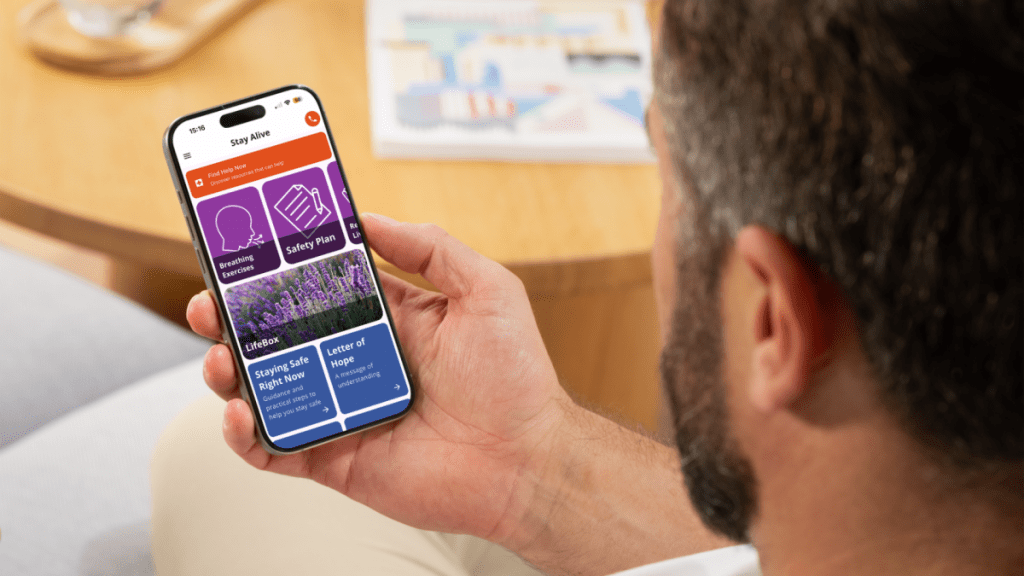
Stay Alive app
All of these tools and more are available on our Stay Alive app, making them easy to access when you or someone you are worried about is struggling.
Did you know? Our free app was the first in the UK, has won multiple awards and is helping a million people all over the world. Please consider a donation (whatever you can afford) to continue to develop the maintenance and development of our app.
Story of hope - Raymond
Raymond, a veteran, shares his story of hope and recovery, highlighting the impact of loss, the importance of talking openly about how we feel, and how finding the right support can help us move forward.
“Growing up, I was told, “boys don’t cry.” But holding in your feelings only builds pressure, and when the pain becomes too much, it can lead to thoughts of ending your life. Taking that first step to talk and accept help is incredibly difficult, especially for men, but you are not alone. Many men are silently struggling.”
Are you worried about someone?
It can be hard to talk about how we are struggling but listening, offering support, and encouraging someone to seek help can make a real difference.
Here are some ways you can support someone you are worried about:
- Send them a link to this web page so they have all the resources and signposting they may need.
- If someone approaches you about the pressures they feel around masculinity, the first step is an easy one: just listen. Offering emotional support to someone who is struggling can go a very long way.
- If you suggest they seek help, frame it as taking control rather than losing it. Seeking help means facing your problems and showing strength, not weakness.
- Don’t judge or dismiss their feelings.
- It can be hard to talk about feelings but talking to them about it can take some of the pressure off them. You can start a conversation by asking “Are you ok?” and ask again, “Are you really ok?” Ask at least twice if they say they are fine.
- If you are worried they are feeling overwhelmed and having suicidal thoughts, our Ask now, save lives page has guidance on how to start a conversation. Asking someone if they’re suicidal could protect them.
Stay Alive app
Our award-winning Stay Alive app provides additional information on how to keep someone safe, including warning signs, practical steps, things to avoid and more.
Learn more about how to approach a conversation about suicide and support someone who may be struggling.

Gain the skills to support men
Whether you’re experiencing the negative effects of restrictive masculinity on your own wellbeing or supporting someone who is, remember that help is available and recovery is possible. Small steps, practical support, and open conversations can make a real difference, and no one has to face these challenges alone.
Men's Suicide Prevention Hub
Sources
Restrictive norms of masculinity and male mental health
Rigid masculine norms discourage emotional expression and help-seeking among men – American Psychological Association, Guidelines for Psychological Practice with Boys and Men, 2018.
Men who strongly conform to traditional masculinity norms experience higher levels of depression and suicidality – Seidler et al., The Role of Masculinity in Men’s Help-Seeking and Suicide, American Journal of Men’s Health, 2016.
Social expectations around being stoic, dominant or financially successful increase psychological distress during setbacks – Samaritans, Men, Suicide and Society, 2012.
Toxic masculinity: toxic masculinity vs healthy masculinity examples – BBC Bitesize
Bennett, S., Robb, K. A., Zortea, T. C., Dickson, A., Richardson, C., & O’Connor, R. C. (2023). Male Suicide Risk and Recovery Factors: A Systematic Review and Qualitative Metasynthesis of Two Decades of Research. Psychological Bulletin, 149(7–8), 371–417.
Thompson, E. H. Jr., & Bennett, K. M. (2015). Measurement of Masculinity Ideologies: A (Critical) Review. Psychology of Men & Masculinity, 16(2), 115–133.
Boxed statistics
40% of men have never spoken to anyone about their mental health. – Men’s Mental Health: Why 40% of men won’t talk about it – Priory
2 in 5 men fake interests to seem more ‘masculine’ – ‘Social pressures harming men’ say Samaritans as charity reveals two in five men fake interests to seem more ‘masculine’
68% of men would live differently if they were free from social judgement, including taking up singing, painting or dancing. – ‘Social pressures harming men’ say Samaritans as charity reveals two in five men fake interests to seem more ‘masculine’
Image credits
Professor Green By Eva Rinaldi – https://www.flickr.com/photos/evarinaldiphotography/6821191460/, CC BY-SA 2.0, https://commons.wikimedia.org/w/index.php?curid=20437719
Tom Grennan By Raph_PH – Boardmasters2022 (192 of 246), CC BY 2.0, https://commons.wikimedia.org/w/index.php?curid=145113512
Terry Crews By Gage Skidmore, CC BY-SA 3.0, https://commons.wikimedia.org/w/index.php?curid=61285987