Need Help? Find Help Now
This December, we are shining a light on 12 vulnerable groups at higher risk of suicide.

This December, over 12 days, we are shining a light on 12 vulnerable groups at higher risk of suicide.

About the campaign

Our 12 days of hope campaign shines a critical light on 12 vulnerable groups facing a higher risk of suicide. These groups represent just a fraction of the 30+ communities we support that rely on life-saving resources.

Through this campaign, we share real stories of hope and recovery, key statistics, and practical tools to spark crucial conversations, challenge stigma, and save more lives from suicide. 

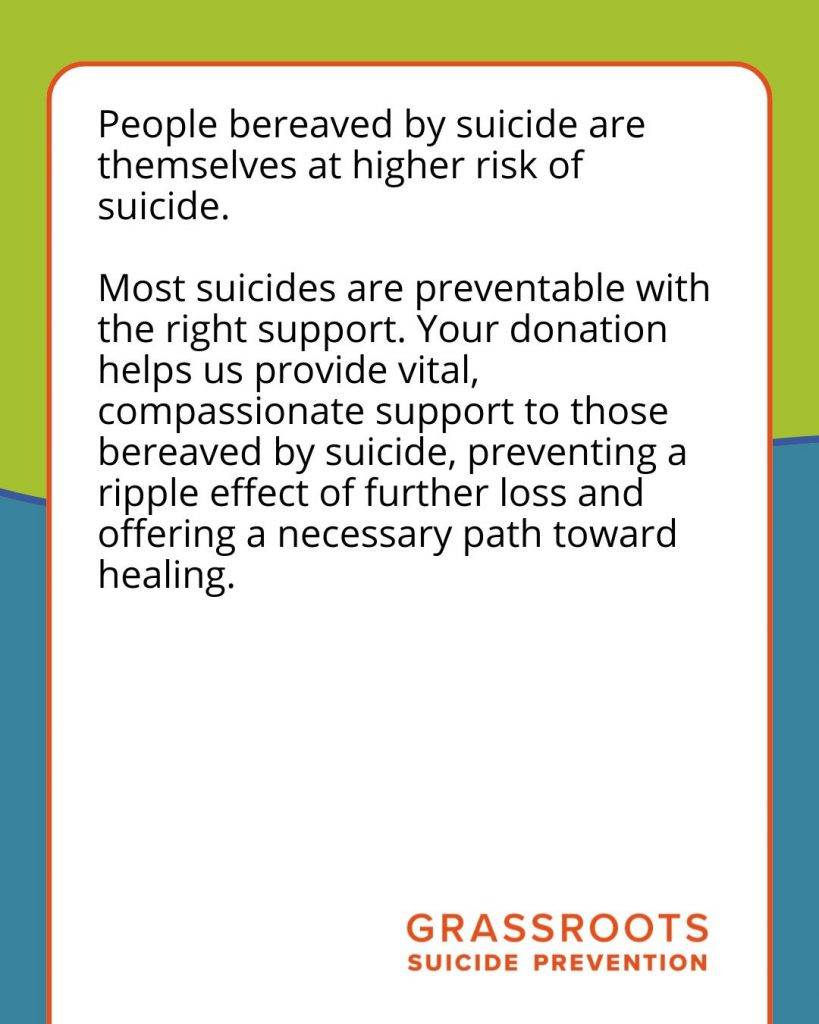
Most suicides are preventable with the right support, but we need your help. By donating, you help fund our essential services for people at risk, and ultimately save lives. 

Each day of the campaign, we will highlight different ways your support can make a difference. No amount is too small.

Please share this page or help spread the word by sharing our social media posts from December 2nd to the 13th on: Facebook, Instagram, LinkedIn, and X.

Share this page:

12 vulnerable groups we support

1

Women

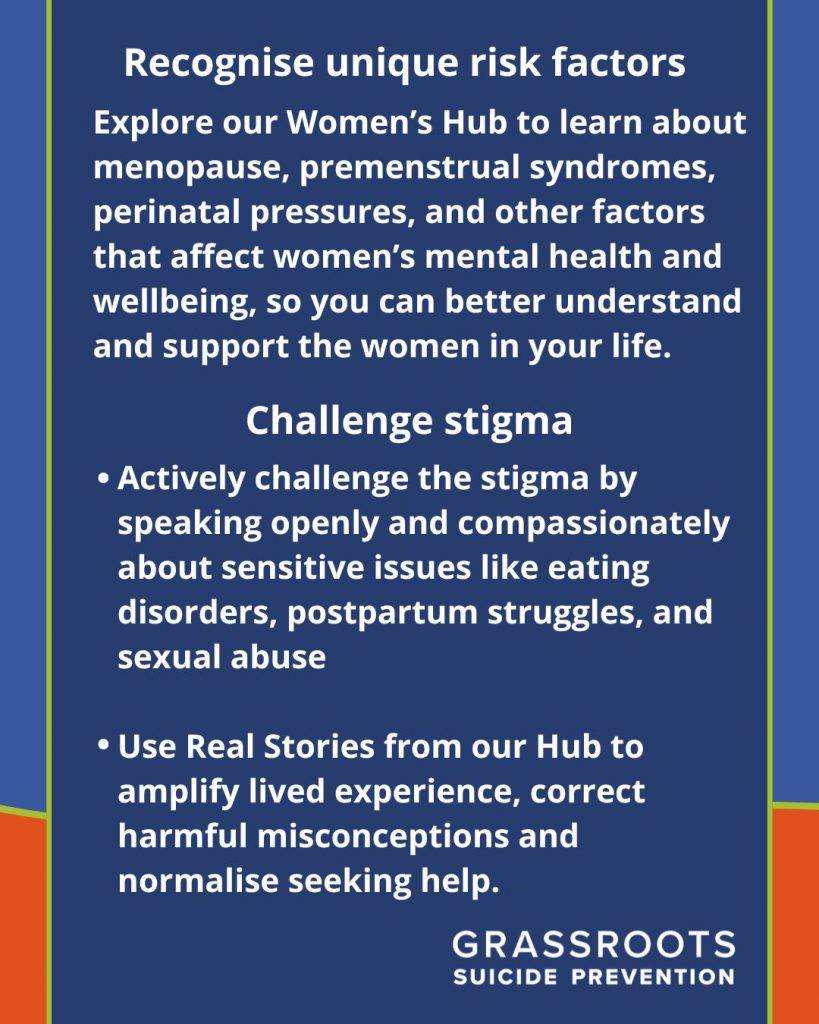
Suicide is one of the leading causes of death for women under 35, a crisis driven by unique factors such as perinatal pressures, abuse, and eating disorders.

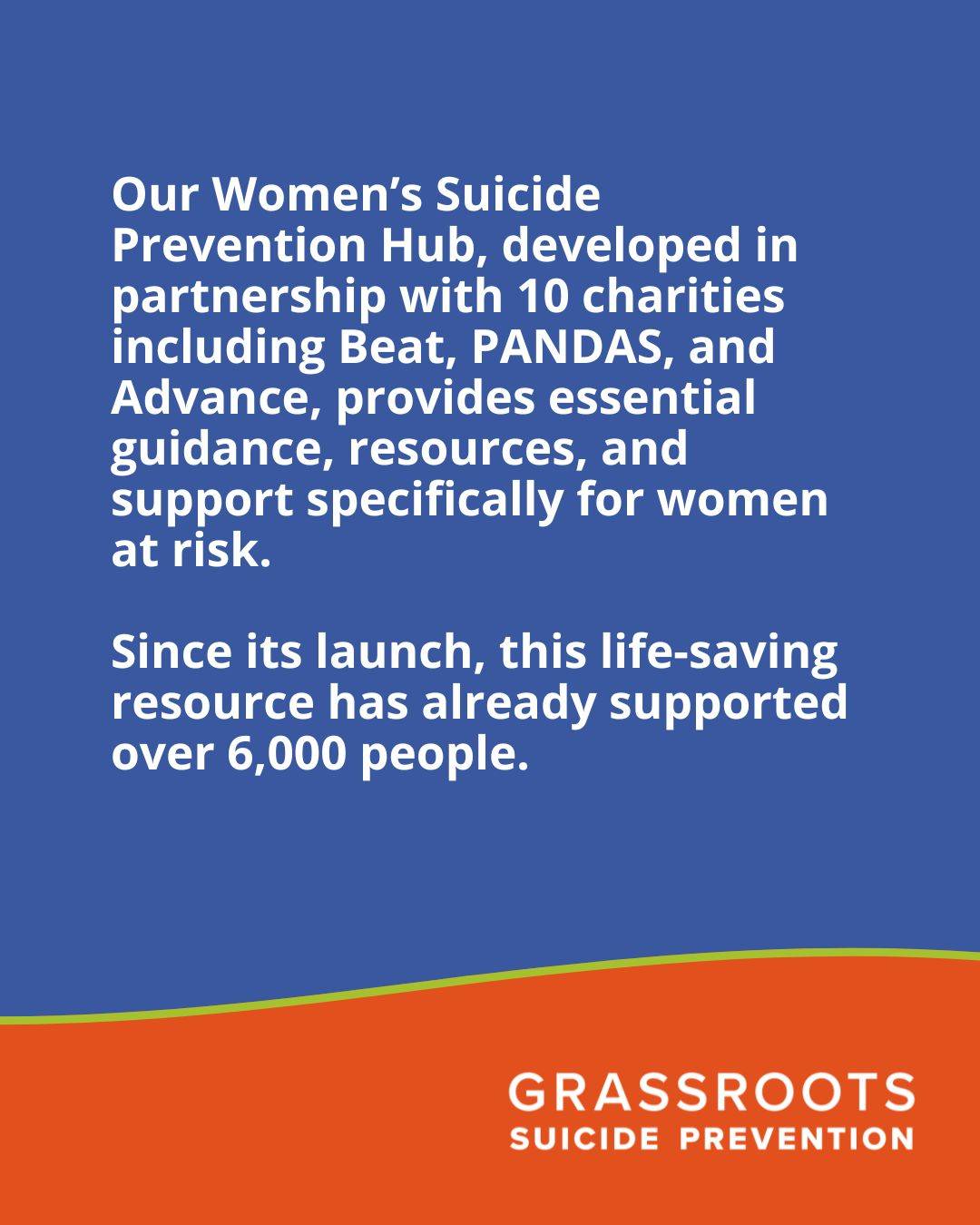
We are dedicated to empowering women and their loved ones to overcome stigma and find the help they need to thrive. That’s why we developed our Women’s Suicide Prevention Hub, a resource that has already supported more than 6,000 people.

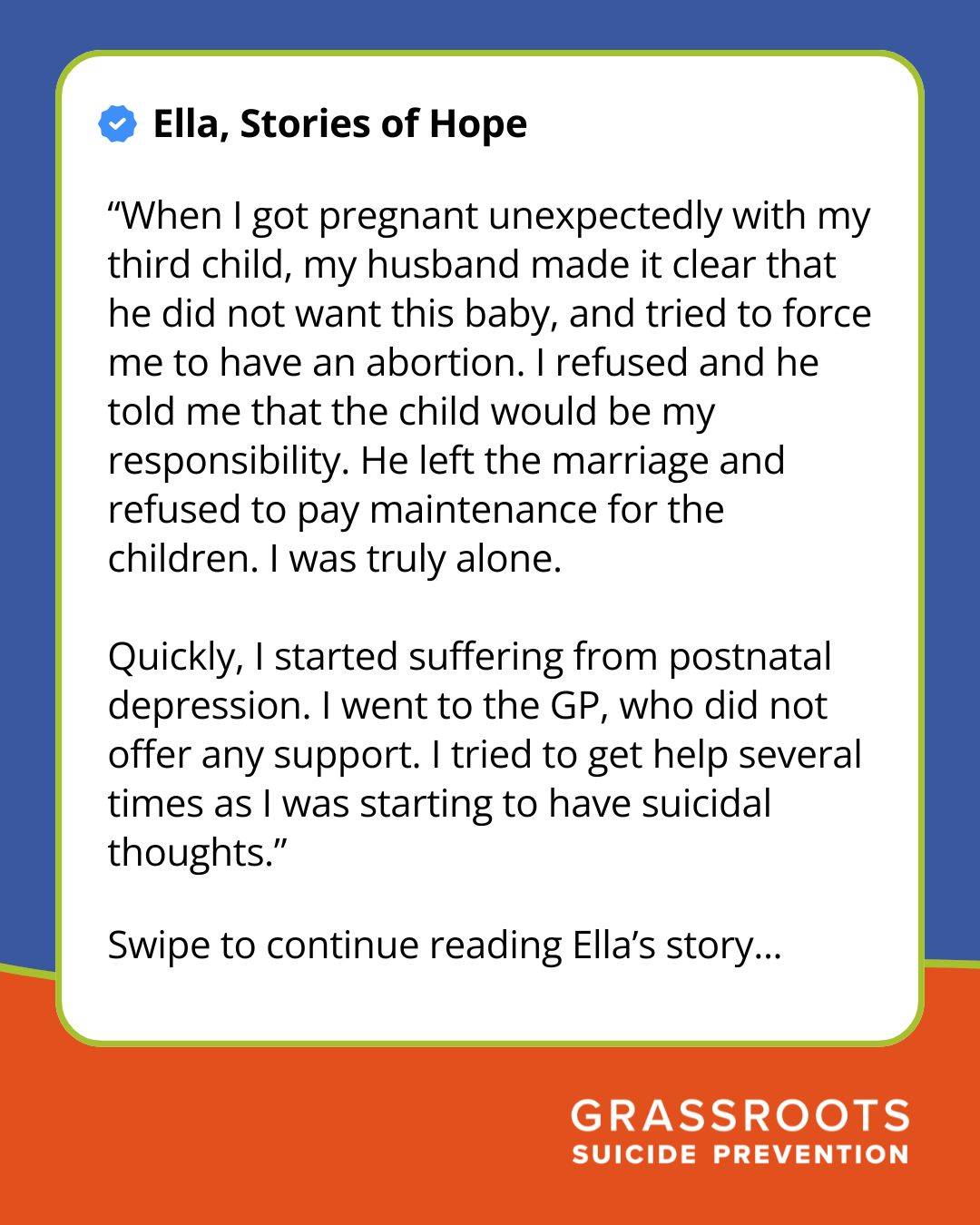
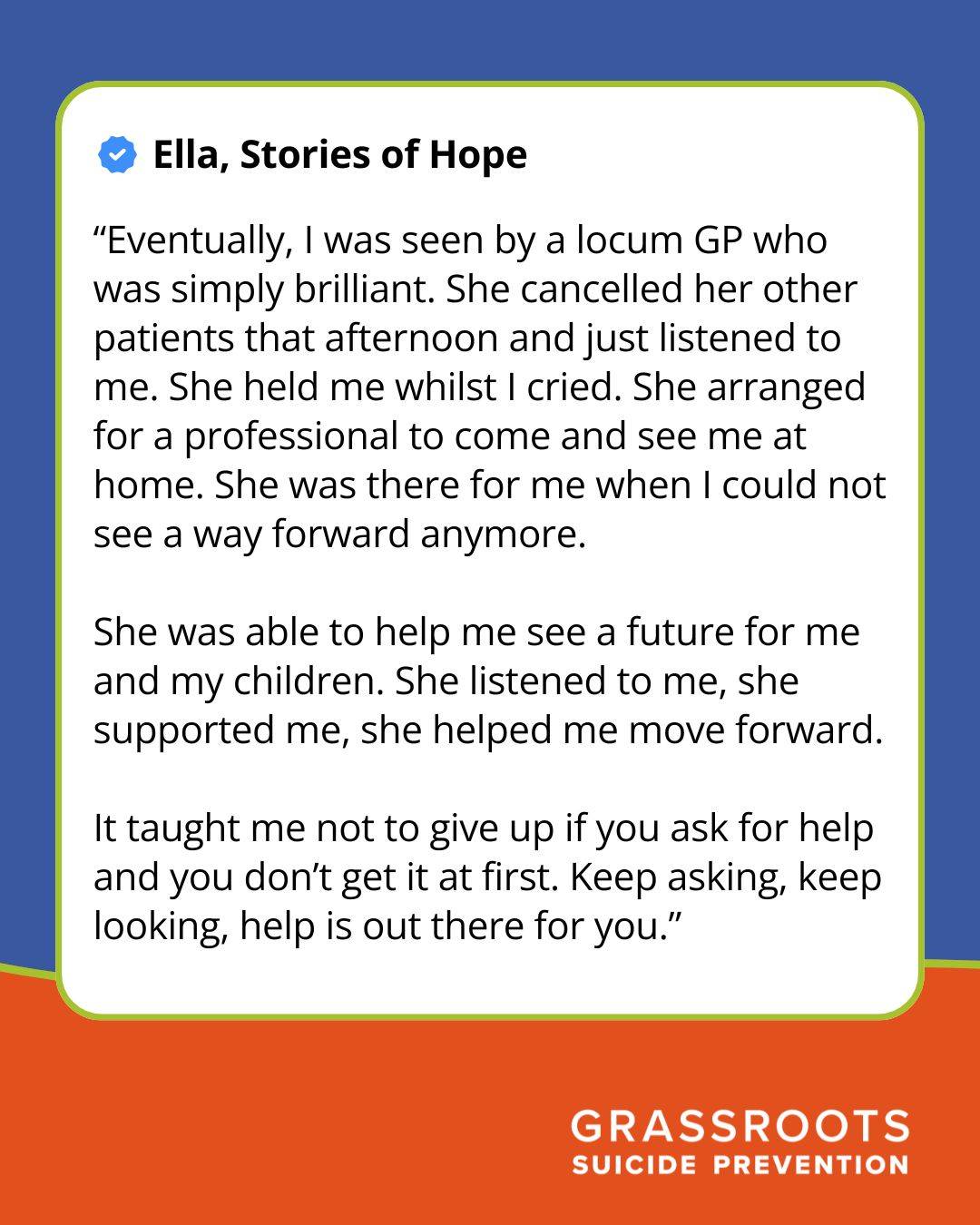
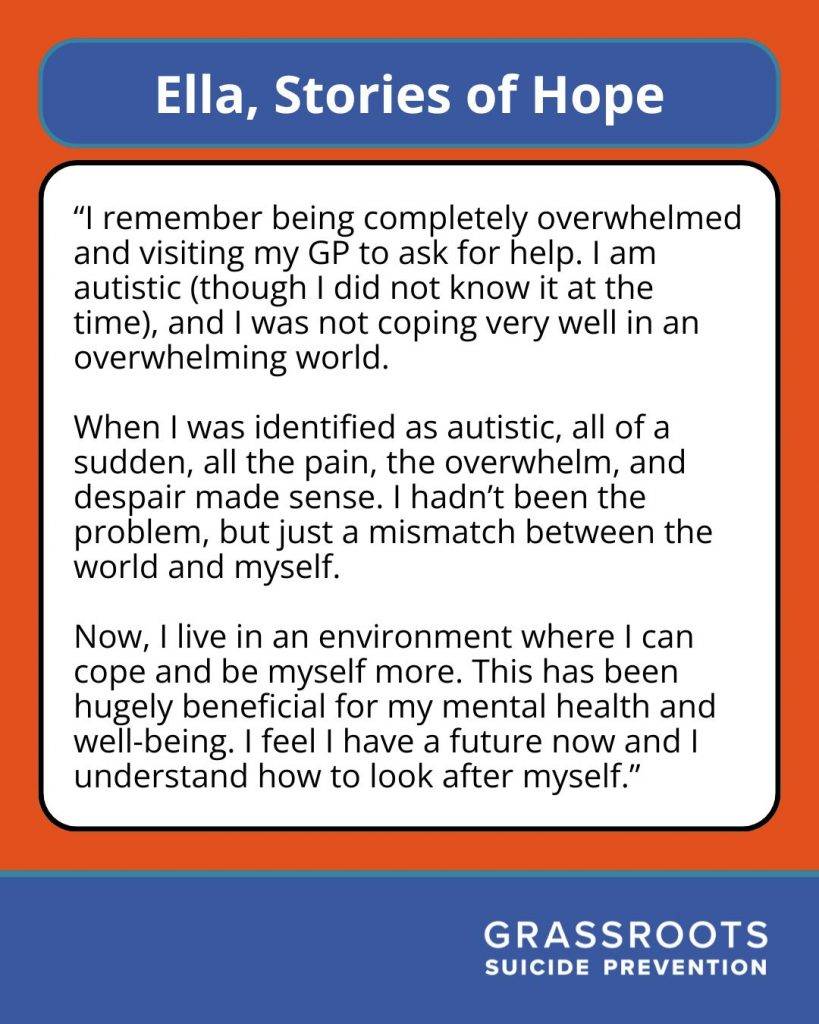
This crucial work ensures more women are recognised sooner and supported earlier with life-saving guidance, helping them on their path to recovery, just as Ella did, so no woman is left isolated or unable to access help before it’s too late.

2

Men

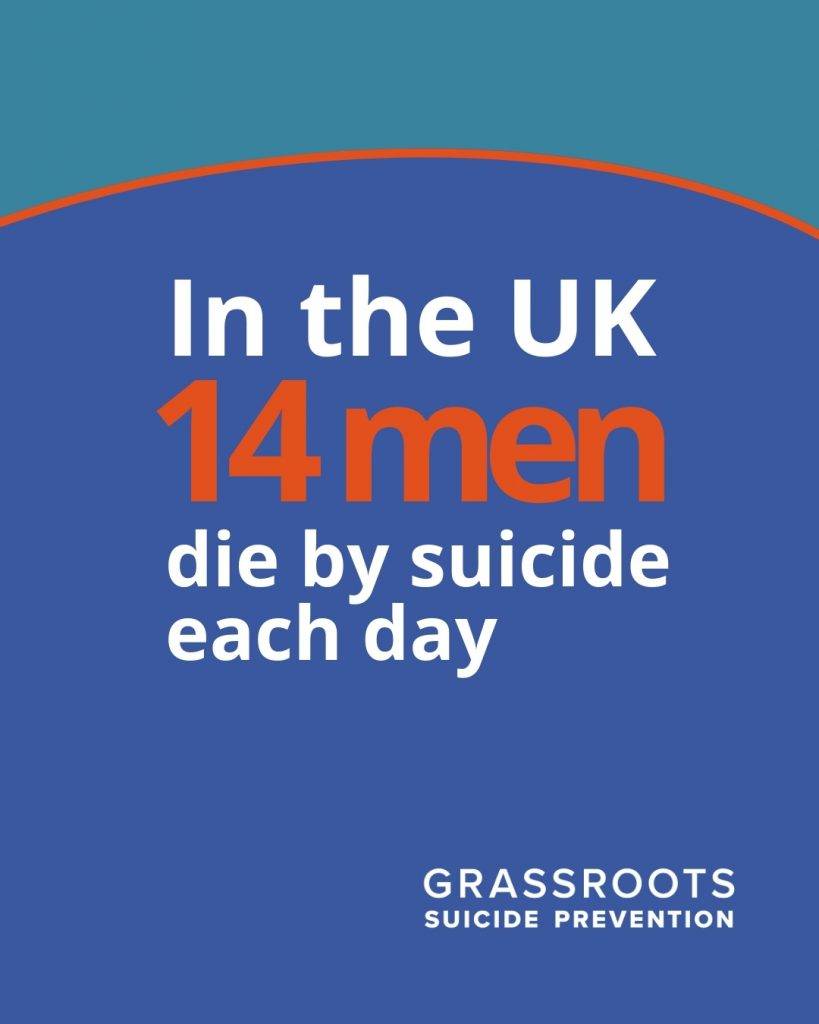
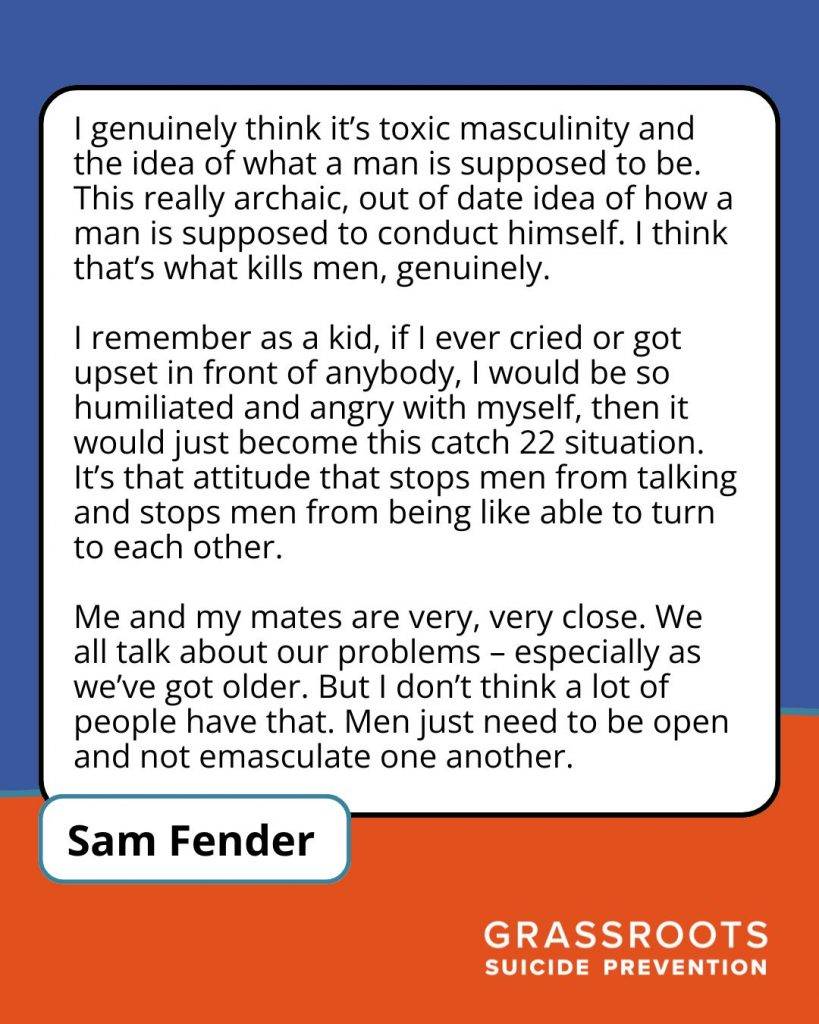
The men’s suicide crisis is undeniable, more men under 50 die in the UK due to suicide than any other reason, equalling 14 lives lost every single day.

A major factor contributing to this crisis is cultural stigma, which actively encourages men to “tough it out” and struggle alone. Changing this mindset is essential for ensuring men get the support they need.

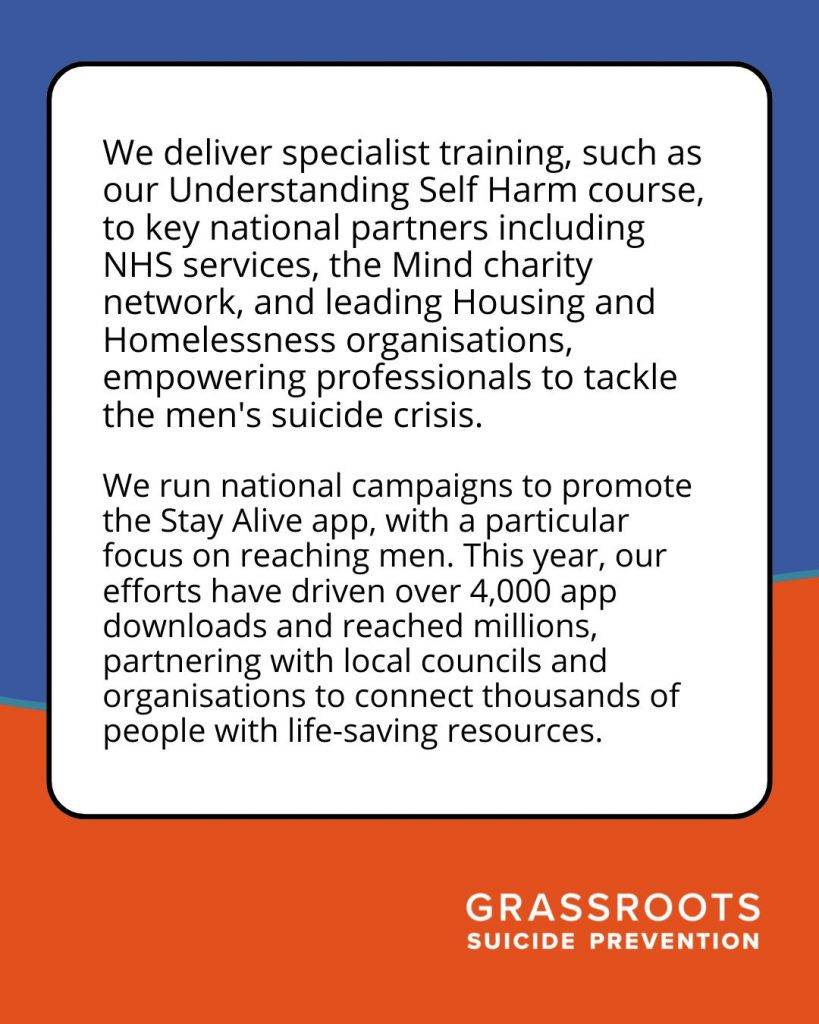
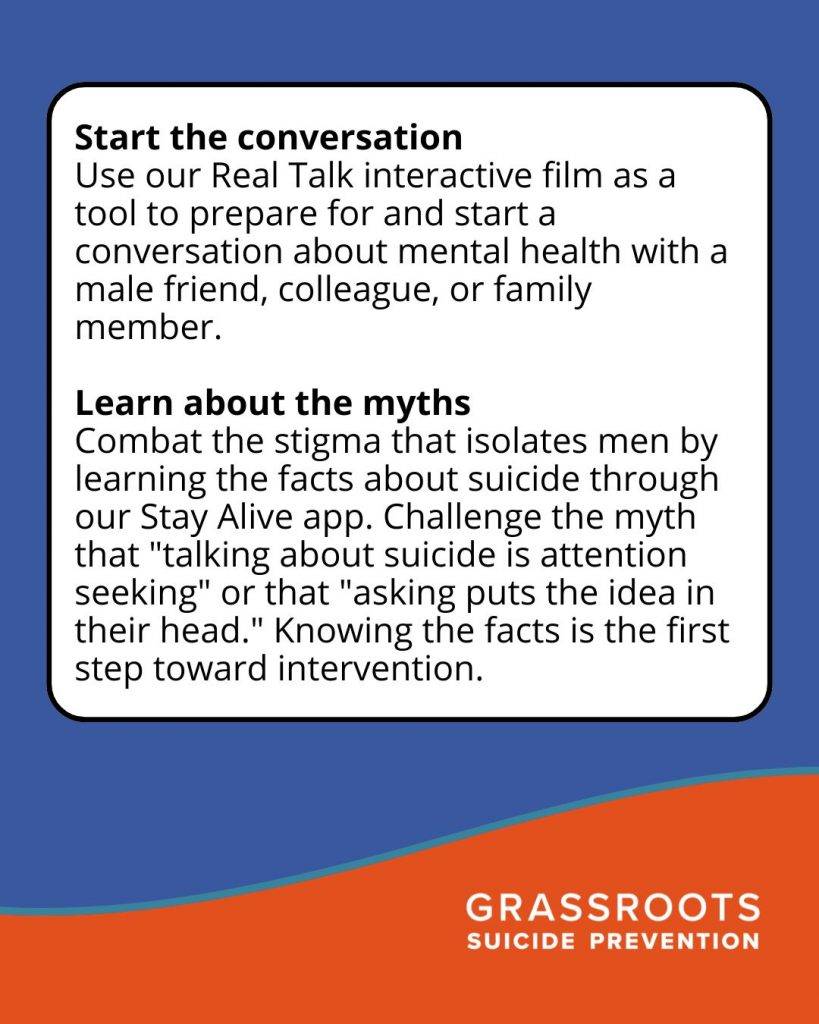
We challenge this stigma by delivering vital training, national campaigns, and providing free tools like our Real Talk interactive film, helping men break free from the cultural pressure to face challenges alone and empowering them to be vulnerable and seek support when they need it.

3

Children and young people

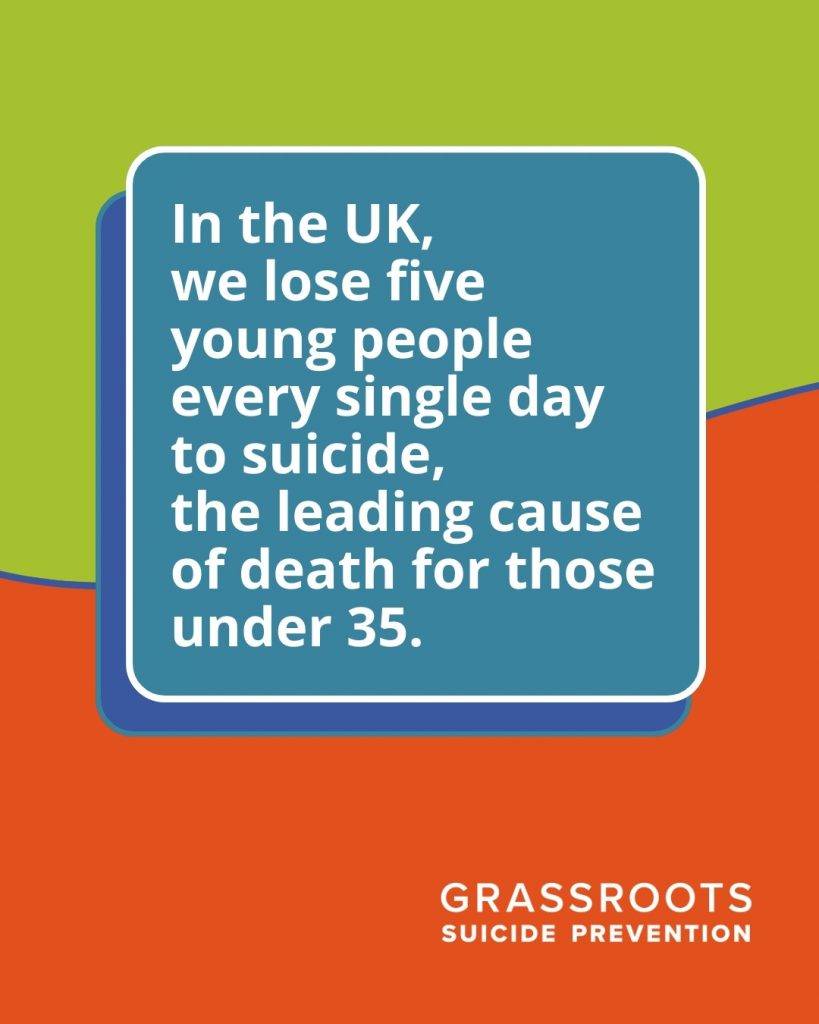
On average, around five young people take their lives each day, and many face overwhelming pressures at school, home, and online.

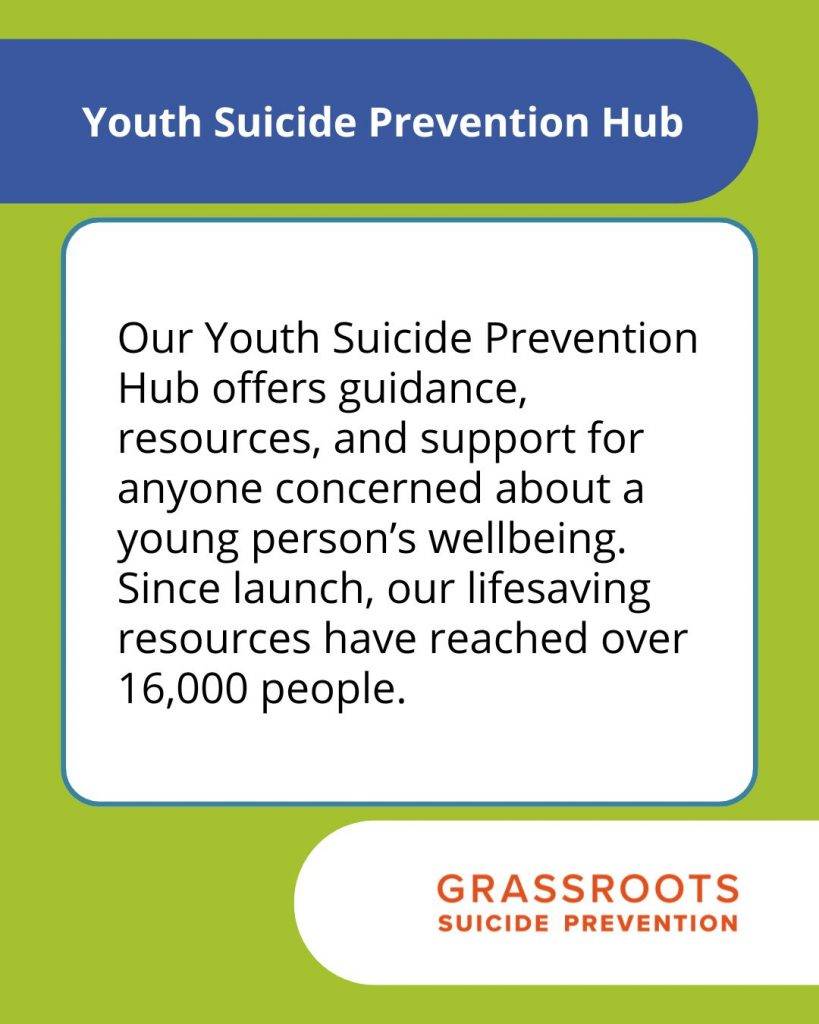
To respond to this crisis, we developed our Youth Suicide Prevention Hub, which provides guidance and advice for anyone concerned about a young person’s wellbeing.

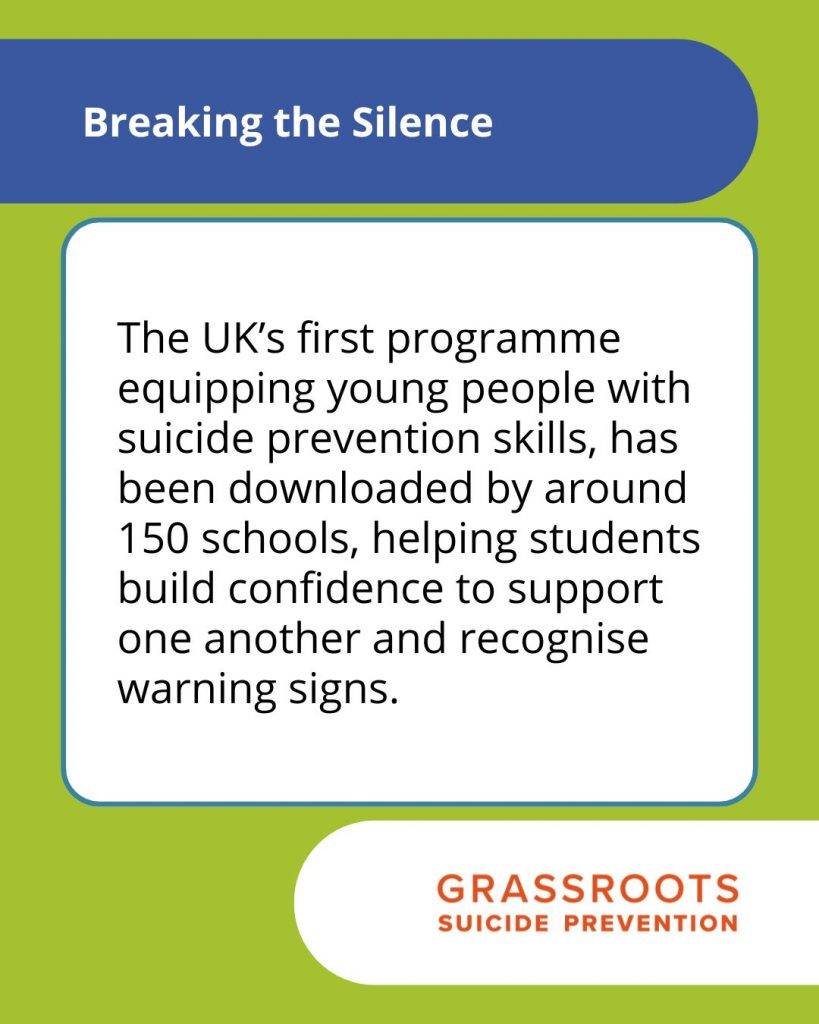
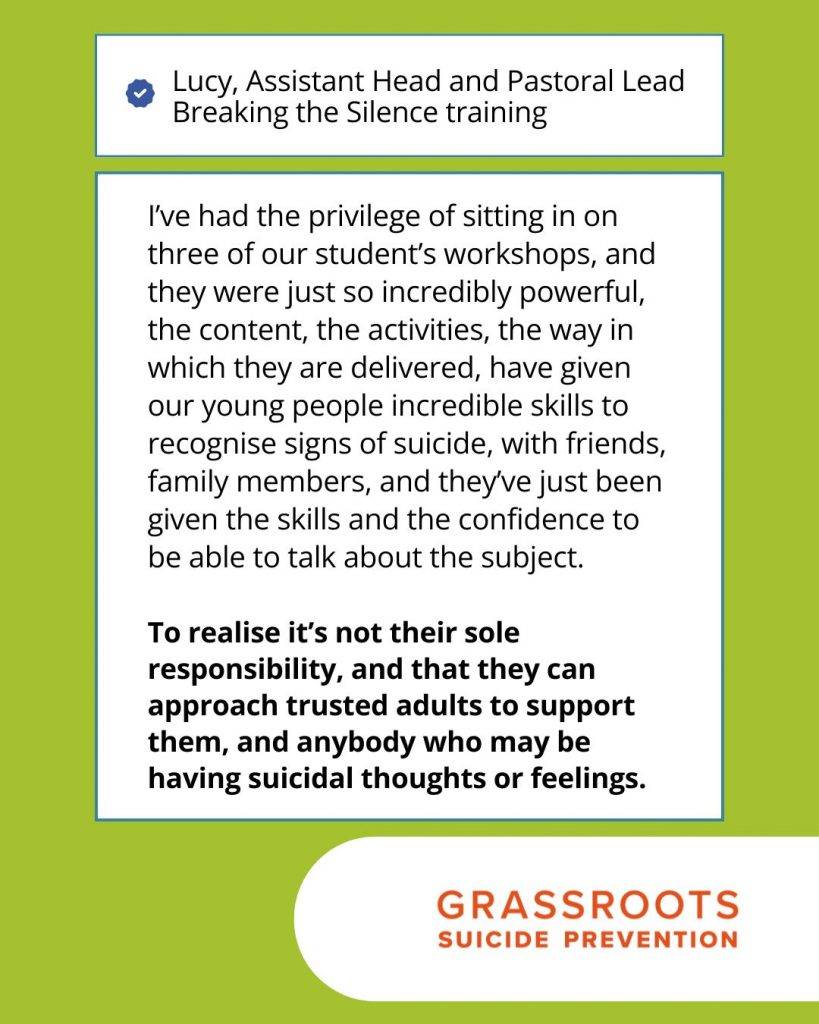
We also launched Breaking the Silence, the UK’s first quality-assured suicide prevention training designed for teachers to deliver to young people aged 14 and over. Already downloaded by more than 150 schools, it helps students build confidence to support one another and recognise warning signs.

4

LGBTQ+

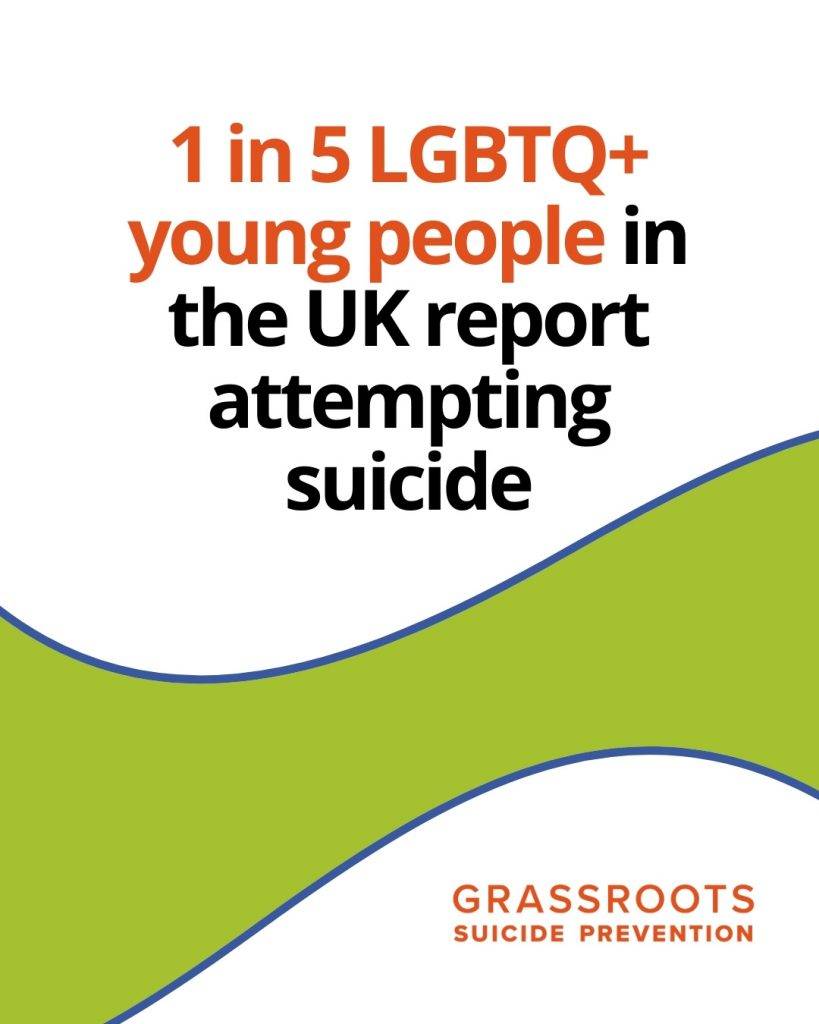
Research indicates that LGBTQ+ individuals face a higher risk of suicidal thoughts, suicide attempts, and self-harm than those who are not LGBTQ+. A recent UK survey showed that nearly 1 in 5 LGBTQ+ young people reported attempting suicide. We are committed to ensuring every LGBTQ+ person feels seen and safe.

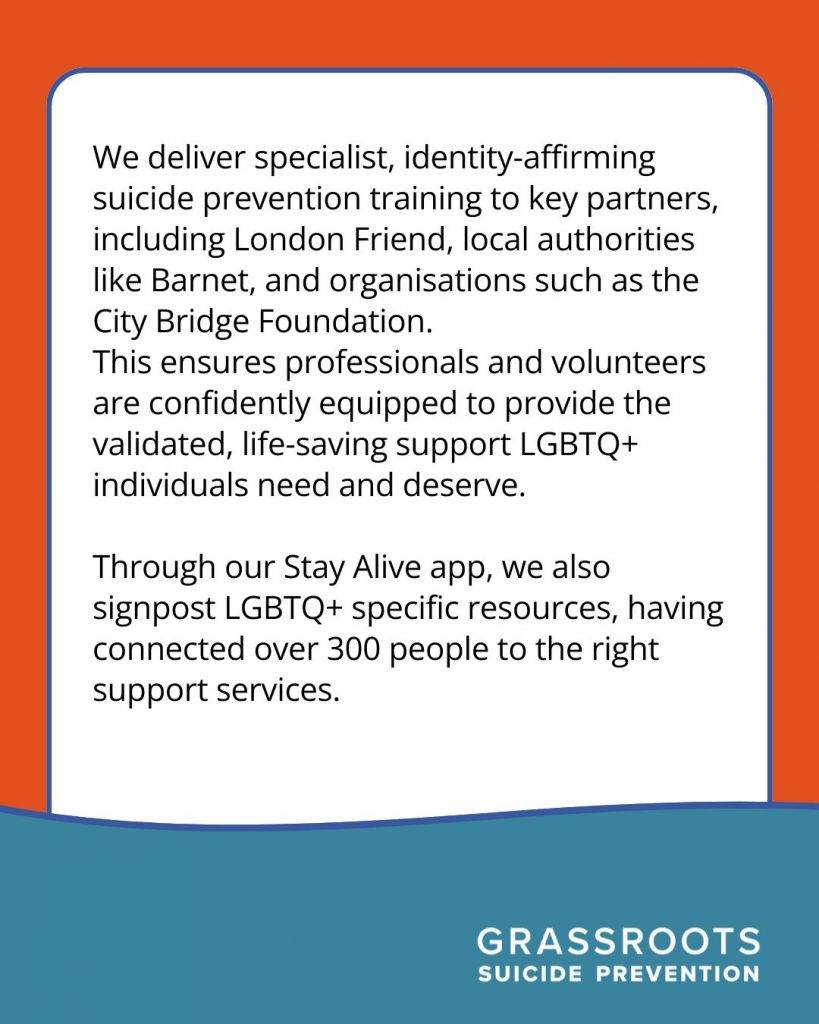
We expand inclusive training, build safer spaces, and provide trusted digital tools that speak directly to LGBTQ+ people’s experiences.

This work ensures that more people feel seen, understood, and supported before reaching a crisis, directly addressing the mental health toll of minority stress and discrimination.

5

Domestic abuse

In 2025, for the second year in a row, more domestic abuse victims died by suicide than were killed by a partner.

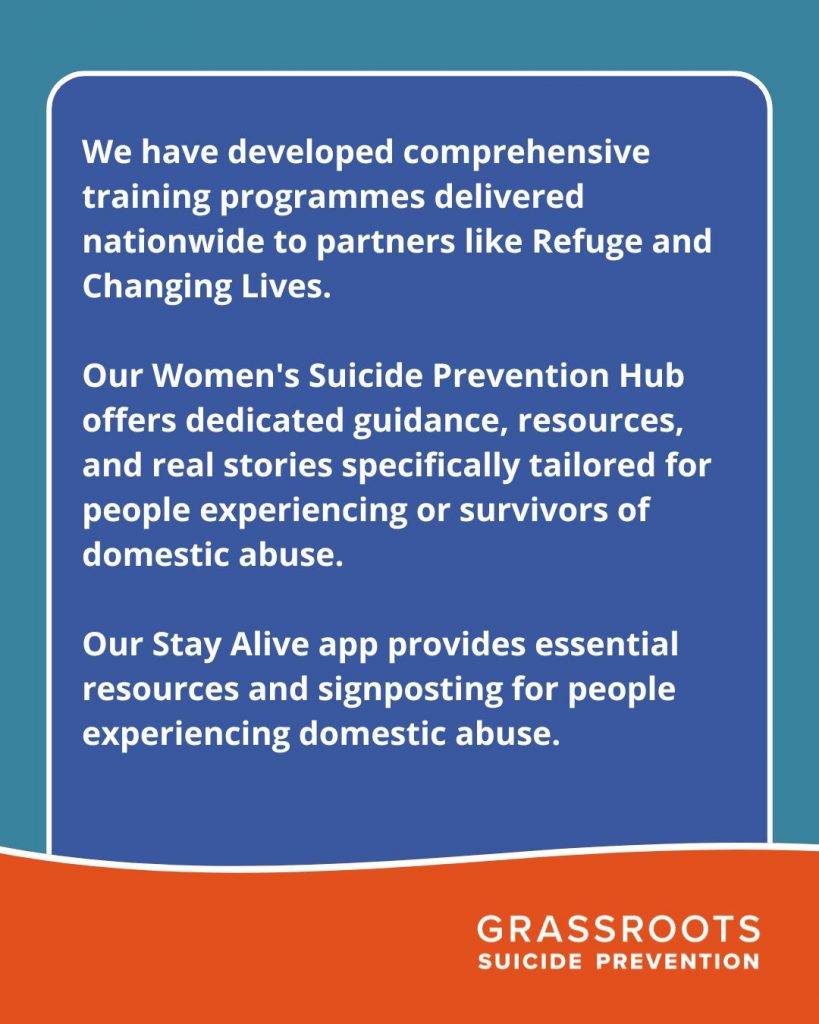
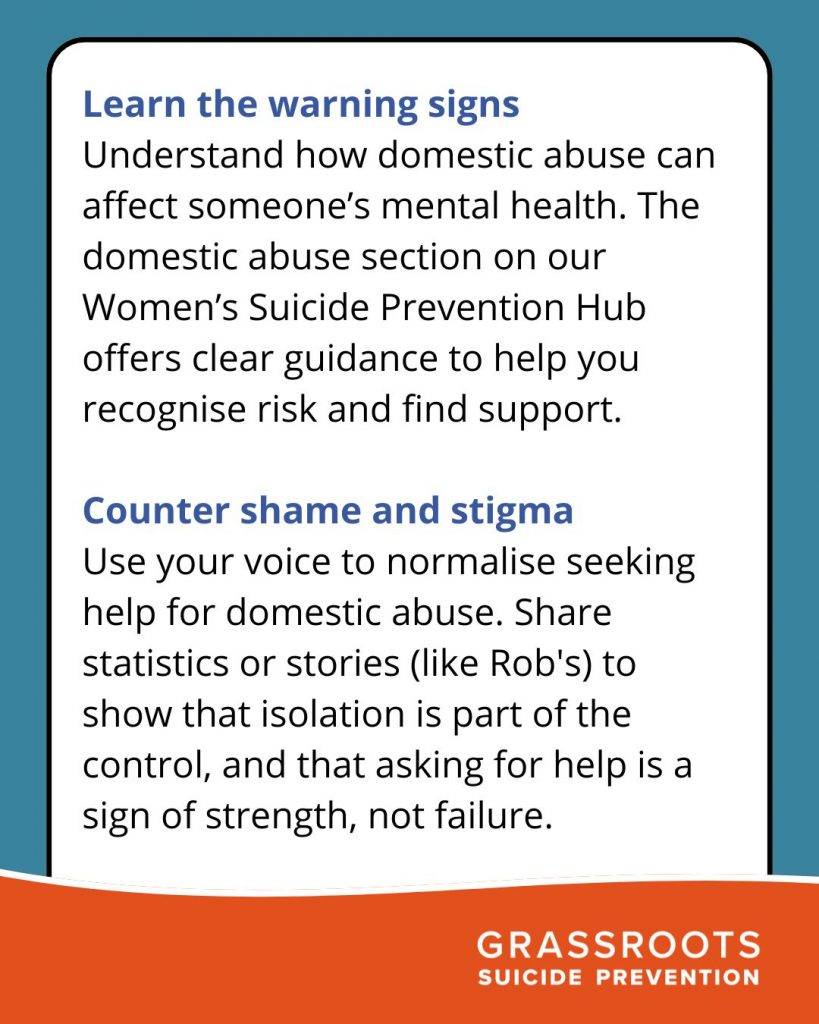
We aim to change this by providing comprehensive nationwide training to organisations like Refuge and Changing Lives and offer safe, dedicated resources within our Women’s Hub and the Stay Alive app.

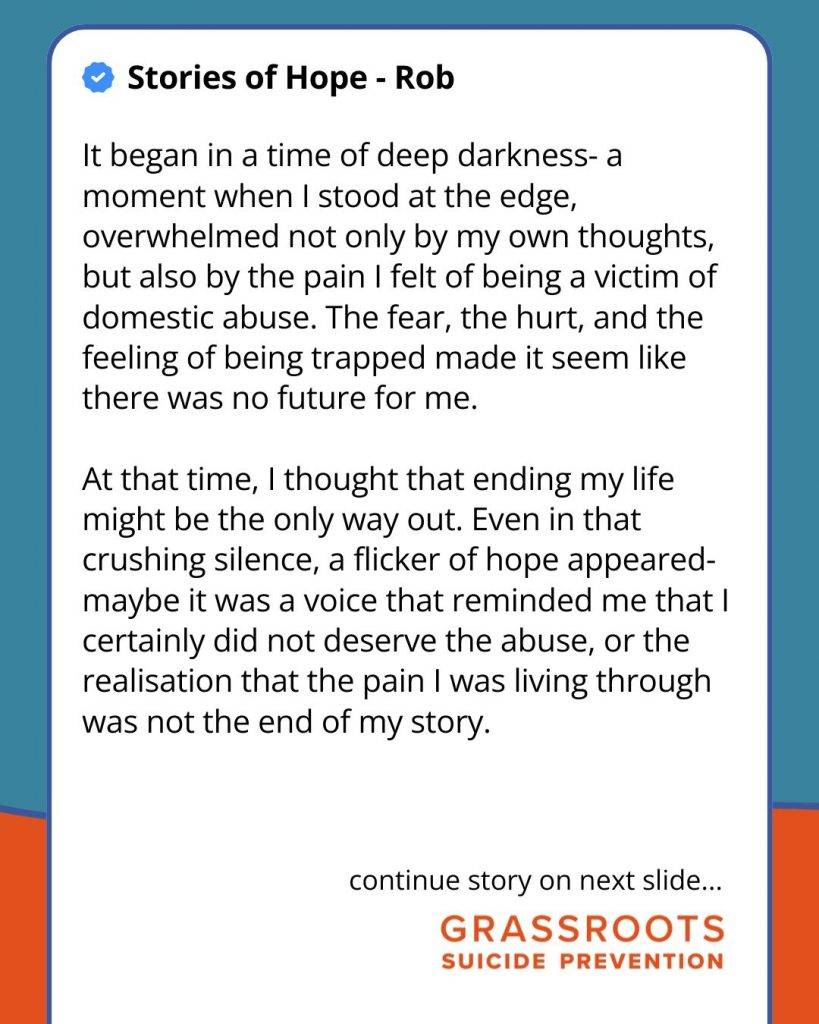
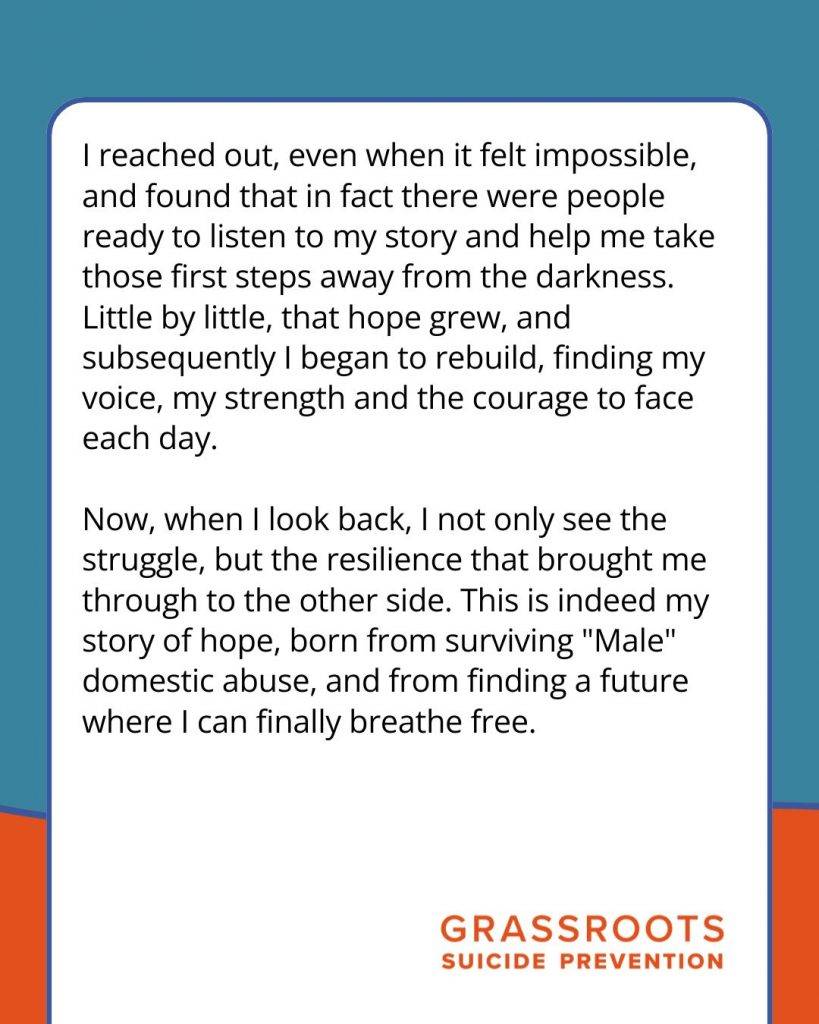
This essential work ensures more people can recognise the warning signs early, counter the isolation of abuse, and find safe, judgement-free routes to support, helping survivors like Rob regain control of their lives and begin the journey toward healing.

6

Neurodiversity

Neurodivergent people face a significantly higher risk of suicide, often linked to misunderstanding, isolation, and barriers to appropriate support.

Our Neurodiversity Suicide Prevention Hub, designed with lived-experience insight, is the vital bridge, providing clear, personalised guidance and practical strategies for autistic people, those with ADHD, and other neurotypes.

7

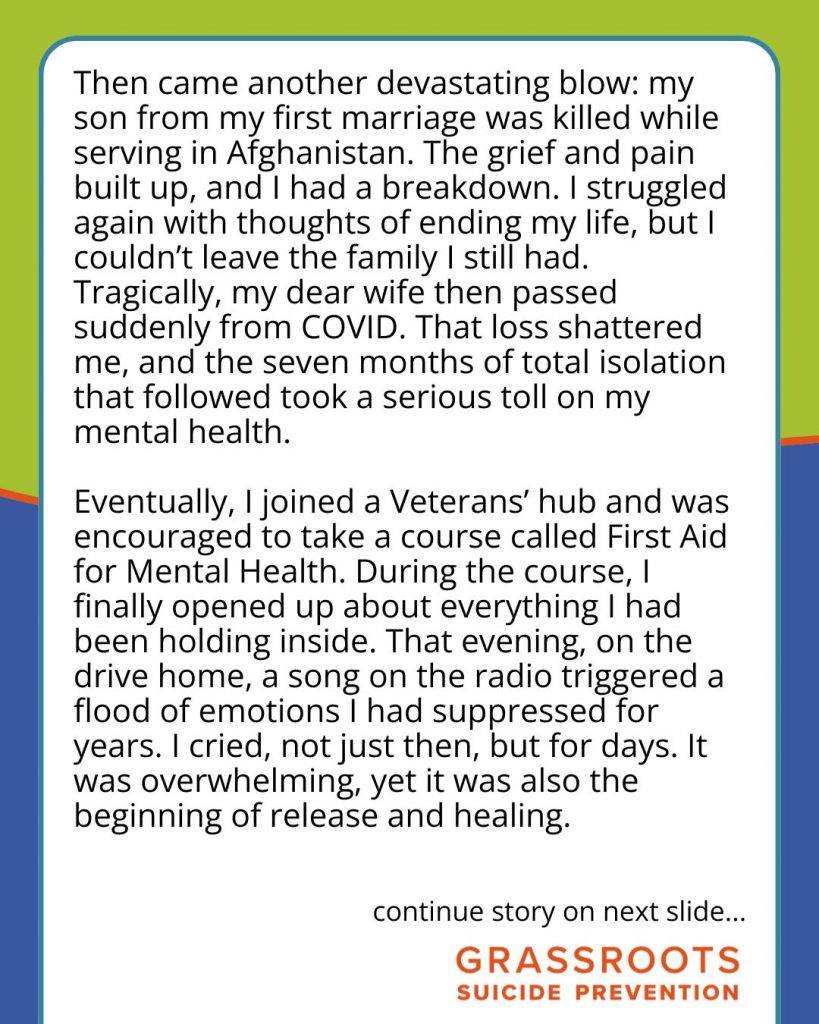
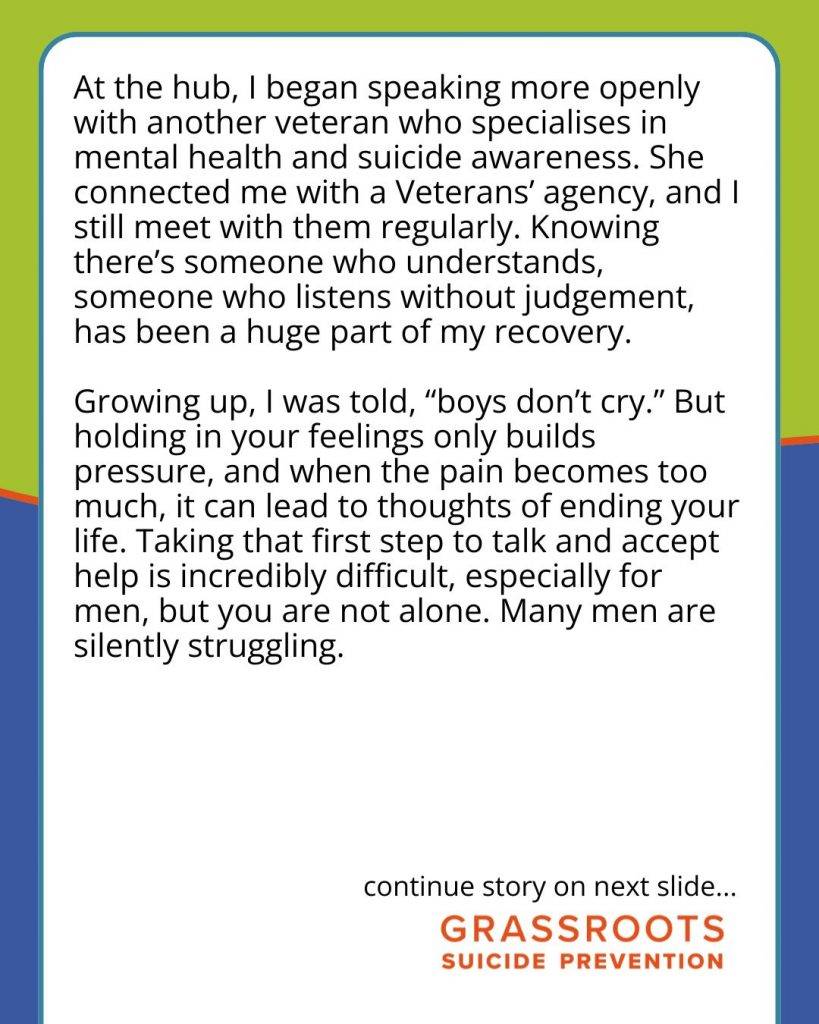
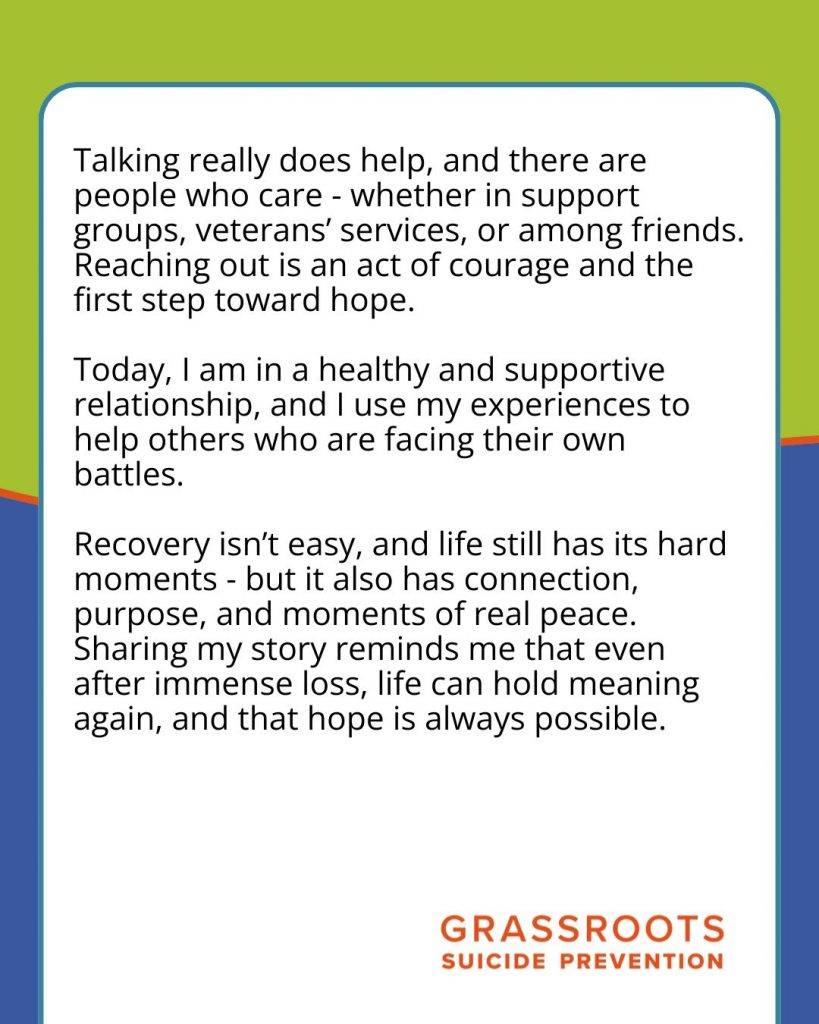
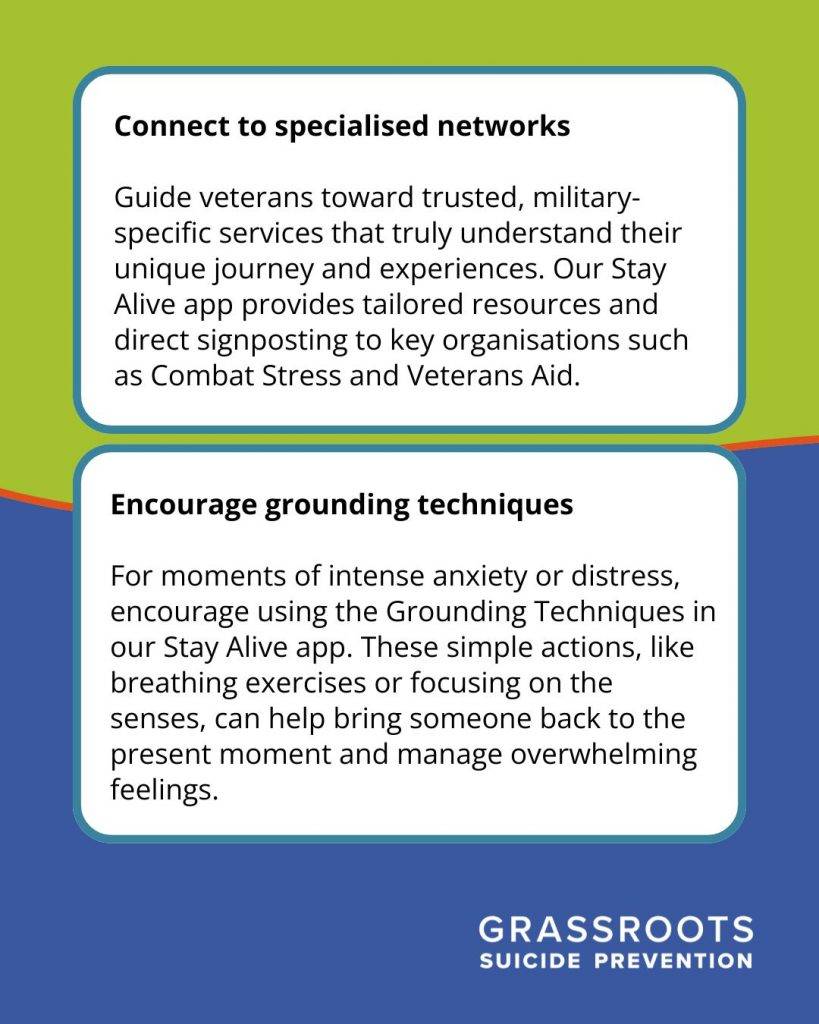
Veterans

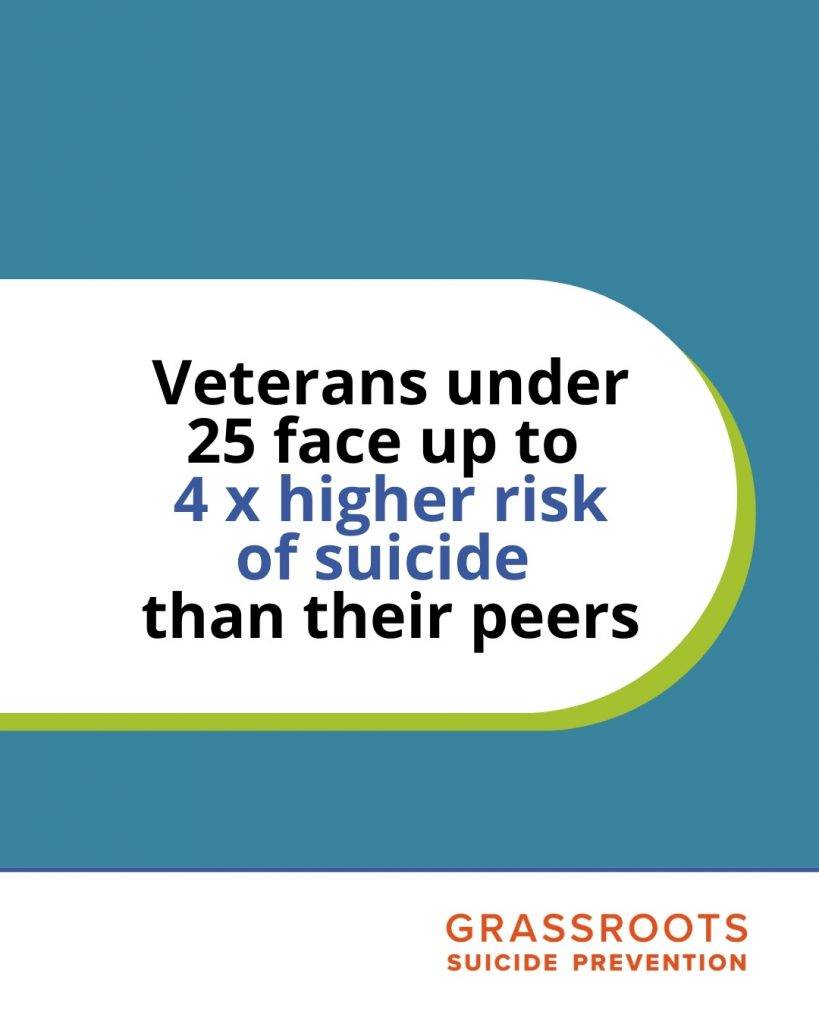
Veterans may experience lasting effects from service, including physical injury, trauma, and mental health challenges, placing them at higher suicide risk.

We deliver specialist training and guidance to veterans, and key organisations such as the Royal Naval Association and Merchant Navy.

Through practical tools, education, and trusted resources, we help veterans access the support they need, reduce isolation, and strengthen the community around them.

8

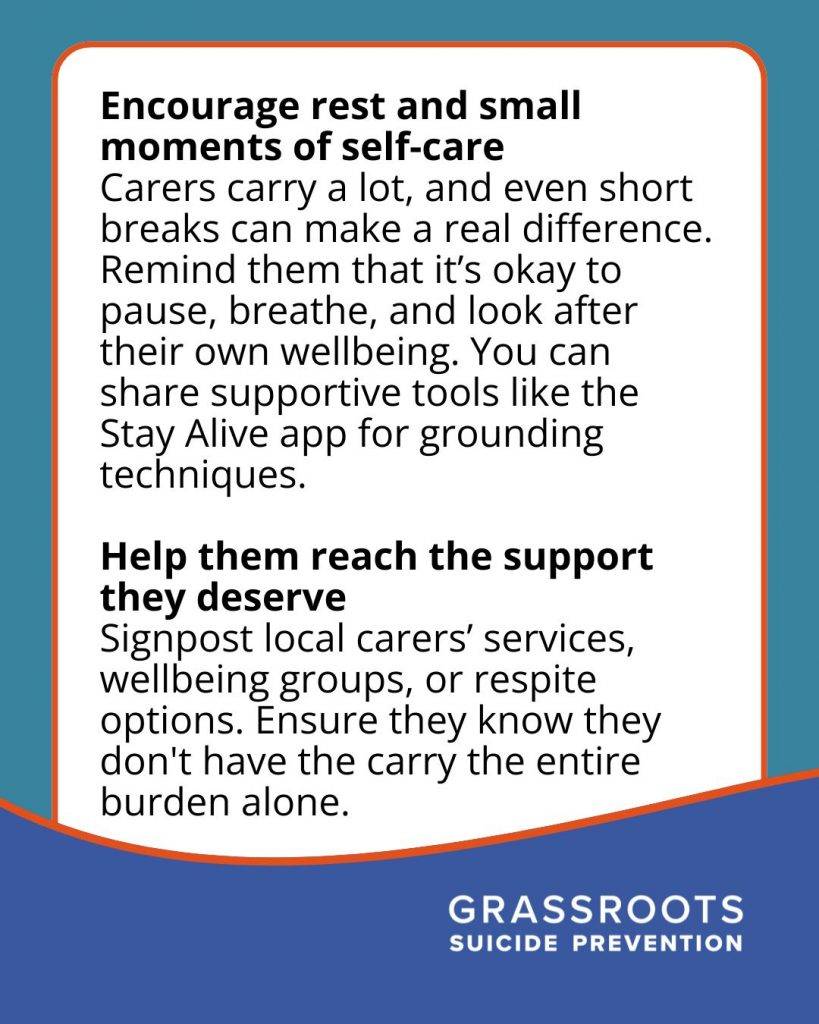
Carers

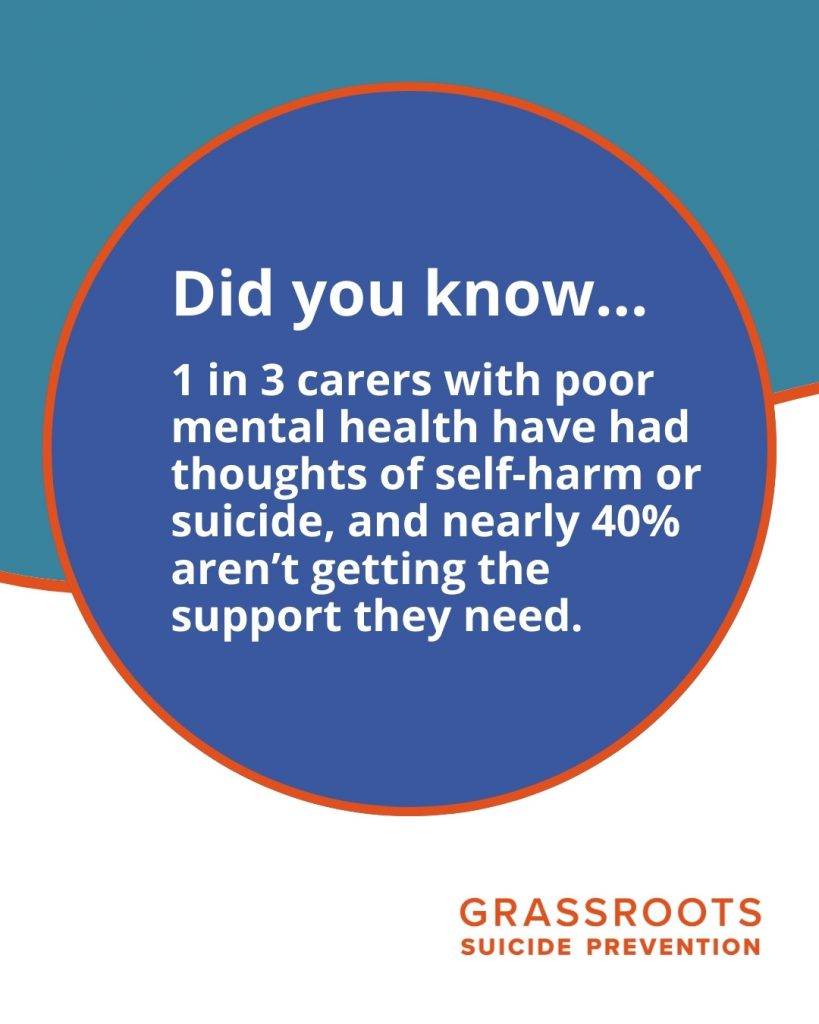
Carers often put others first, leading to exhaustion, burnout, and a heightened suicide risk. According to a recent Carers UK survey, 1 in 3 unpaid carers with poor mental health had experienced thoughts of self-harm or suicide.

We respond by delivering tailored suicide prevention training to carers and carers’ organisations, building the confidence of staff to support both themselves and others at risk.

This work ensures carers are never left carrying the burden of mental distress alone, providing them with the necessary resources and tools to stay safe while continuing their vital role.

9

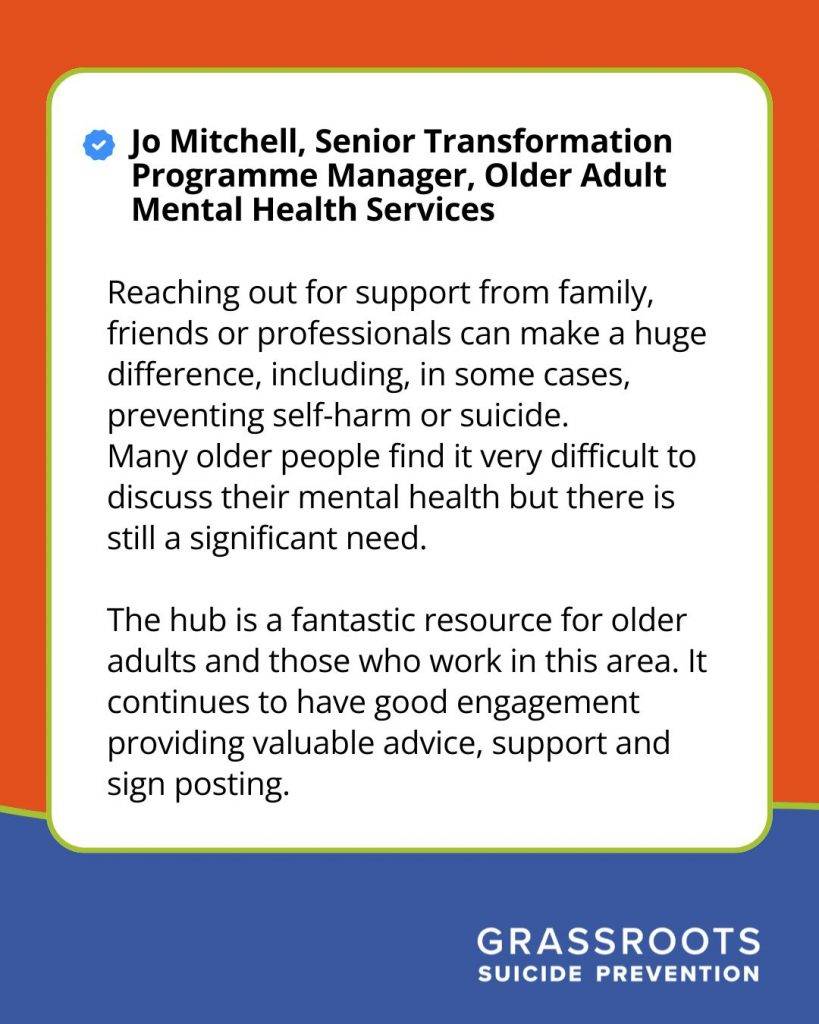
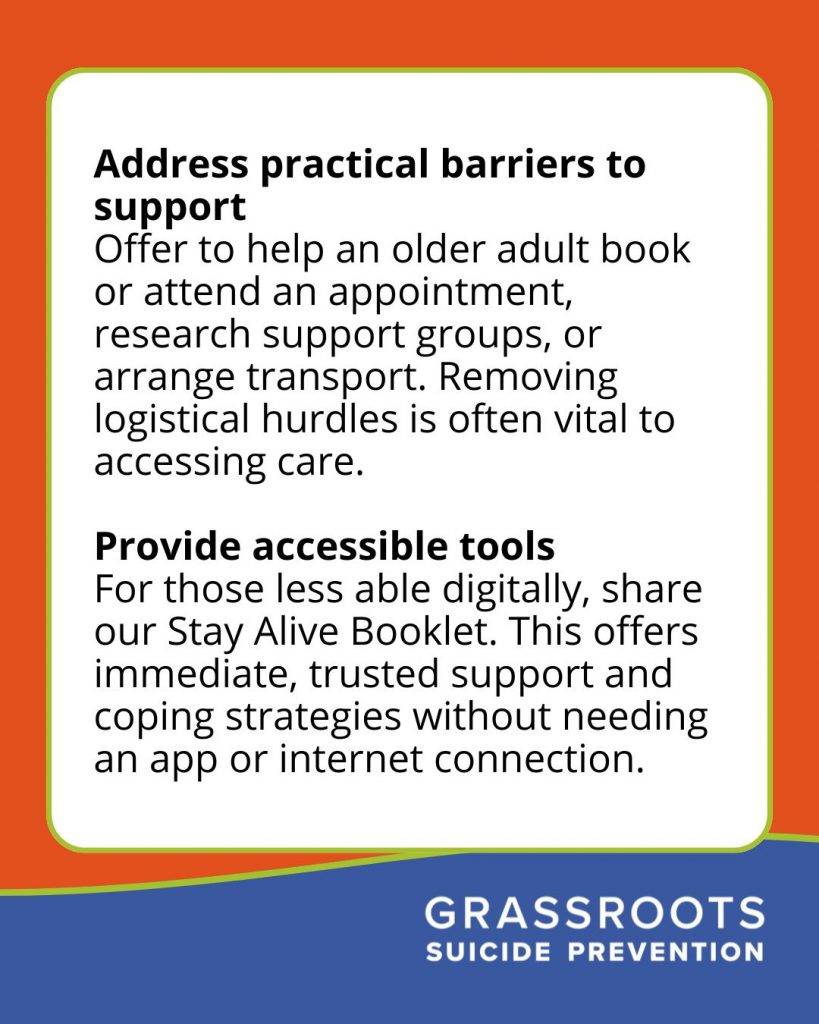
Older adults

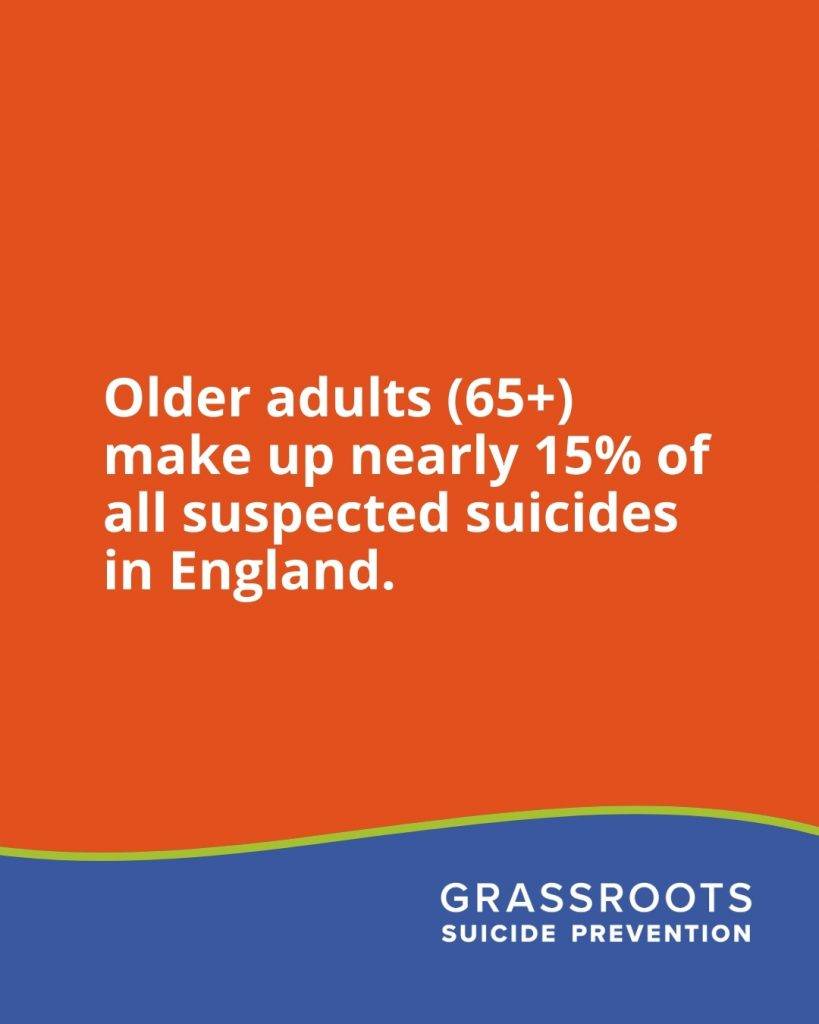
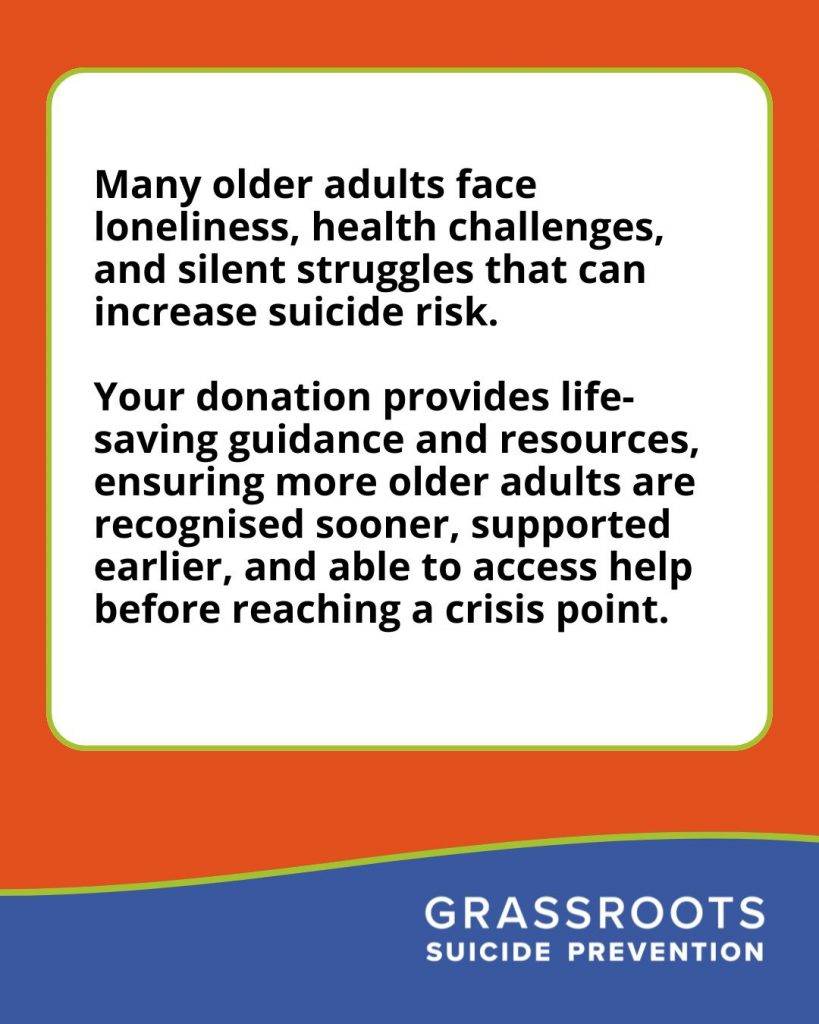
Nearly 15% of all suspected suicides in England are older adults, a crisis fuelled by loneliness, health challenges, and difficulty accessing digital support.

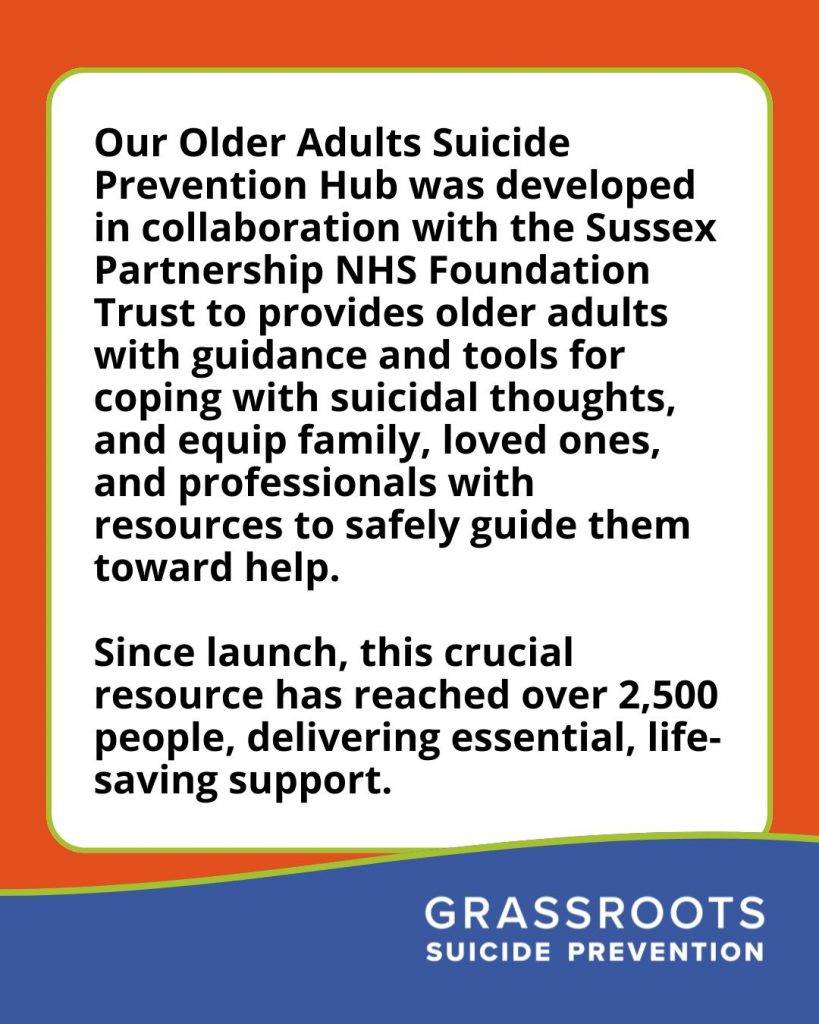
Our Older Adults Suicide Prevention Hub offers guidance, practical tools, and support for older people, their families, and carers. By improving awareness, fostering connection, and providing clear steps for help, we ensure older adults have access to the support they need to feel safer and less isolated.

10

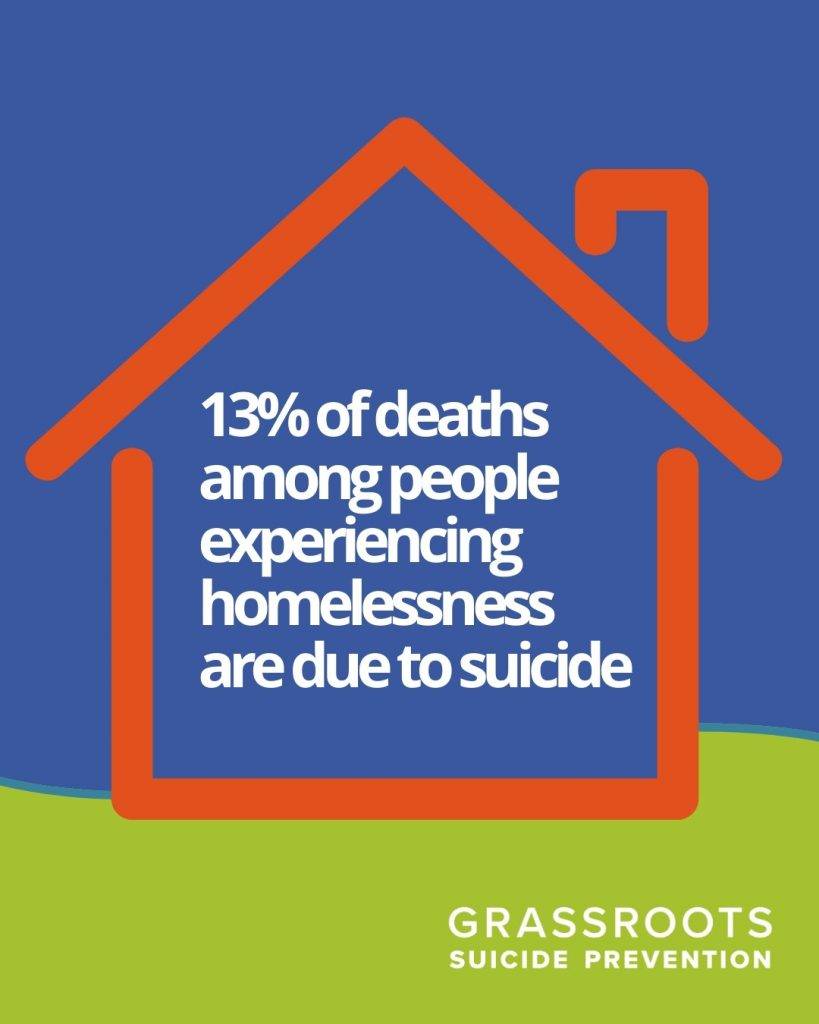
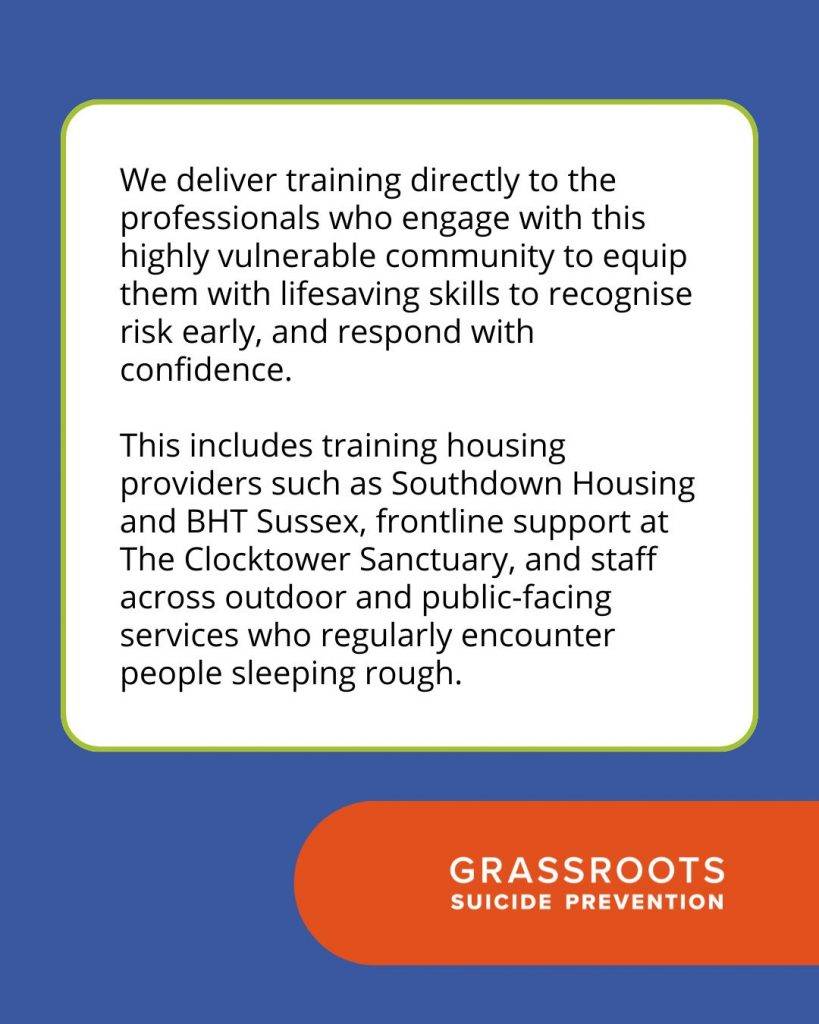
Homelessness

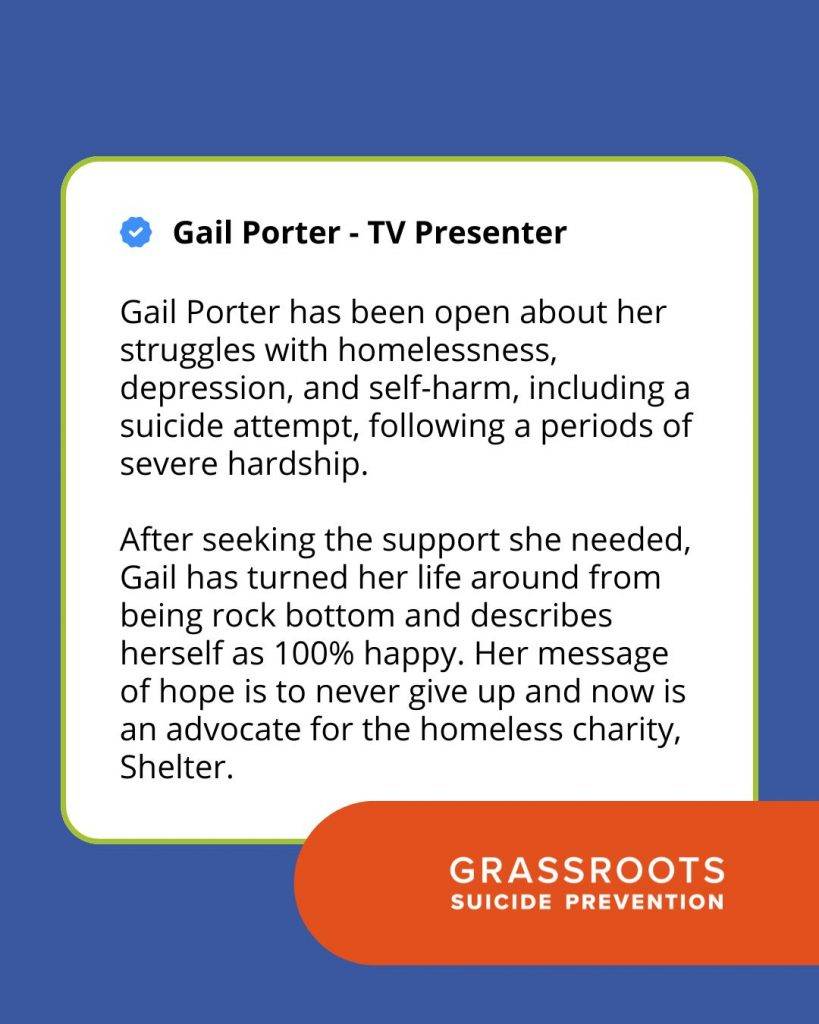
People experiencing homelessness face dramatically elevated suicide risk due to profound isolation, insecurity, and systemic lack of support.

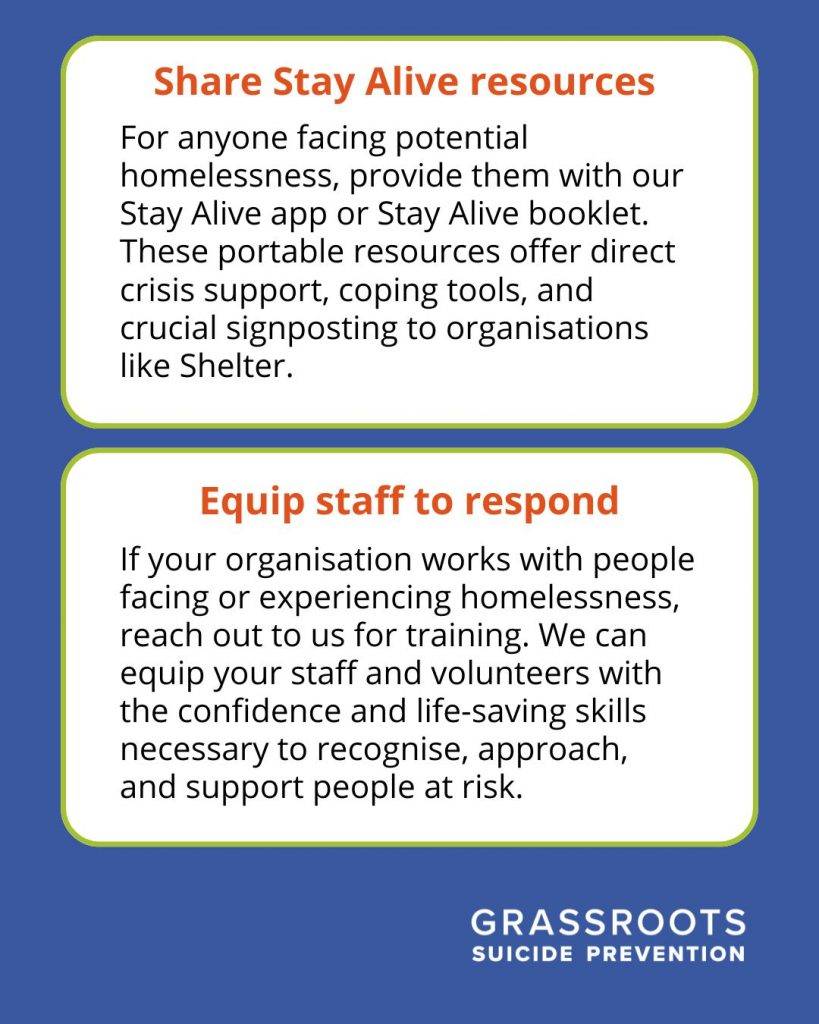
We deliver vital resources, specialist training, and clear pathways to safety, ensuring this highly vulnerable community has access to the support they need. 

11

Online harm

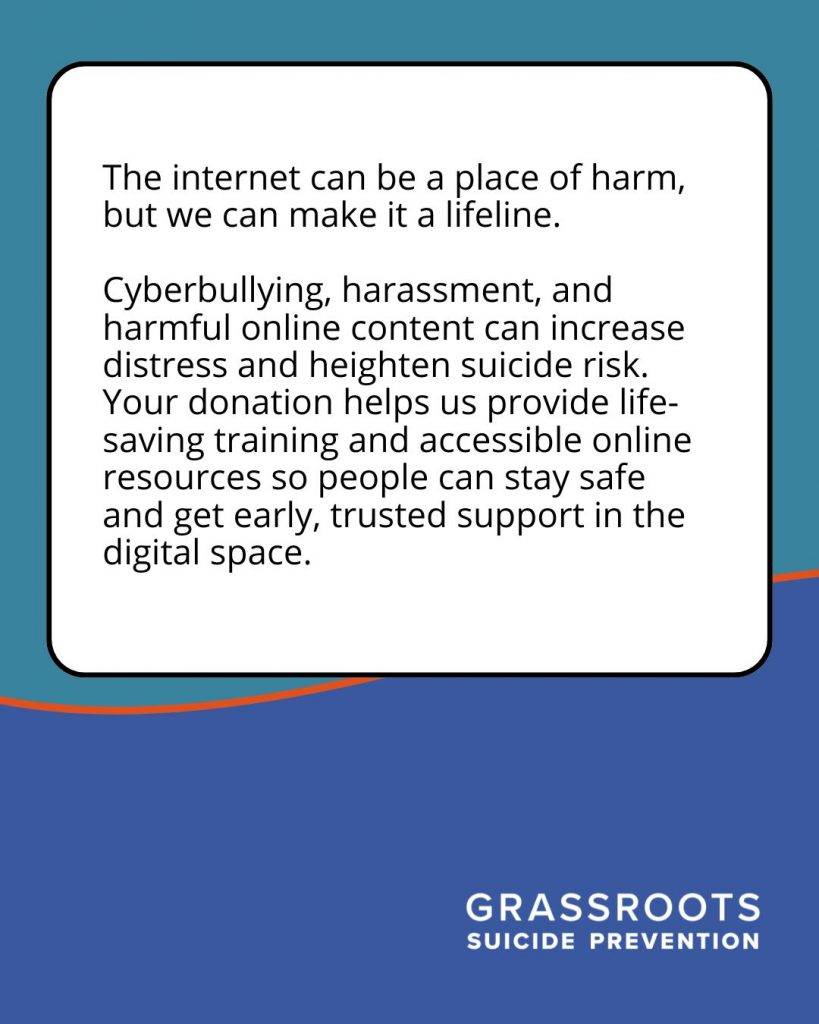
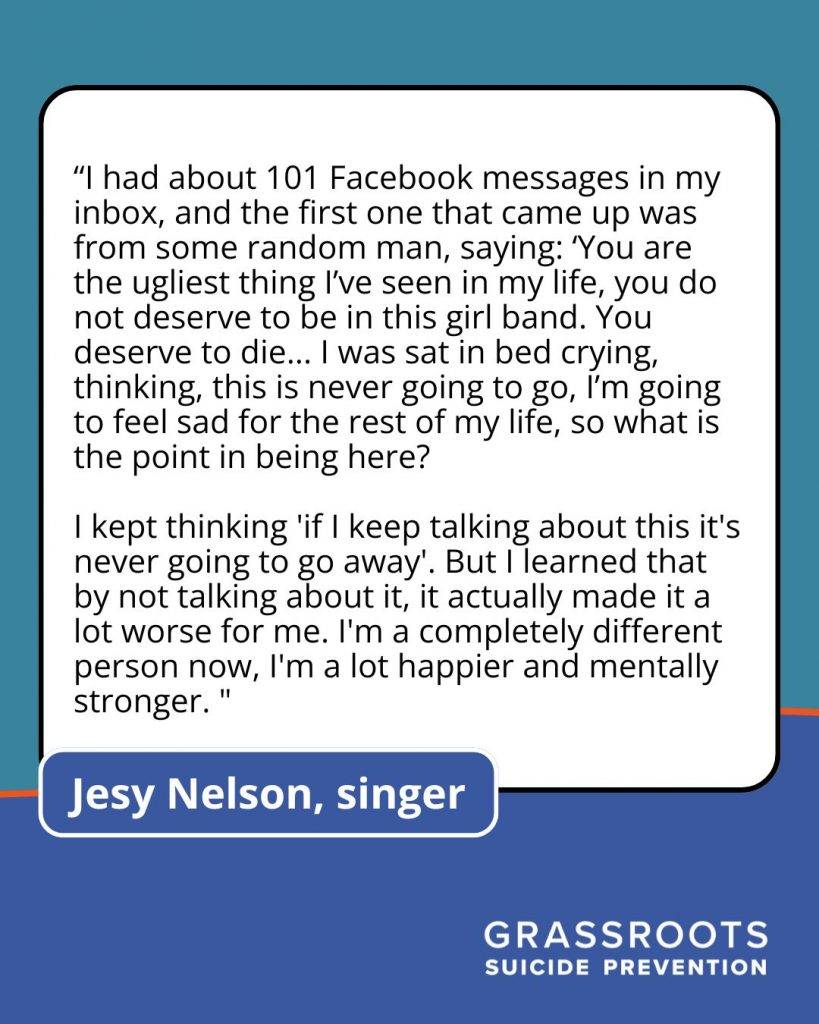
Exposure to online harassment, scams, hate speech, and discriminatory content can increase distress and suicide risk, particularly for vulnerable communities.

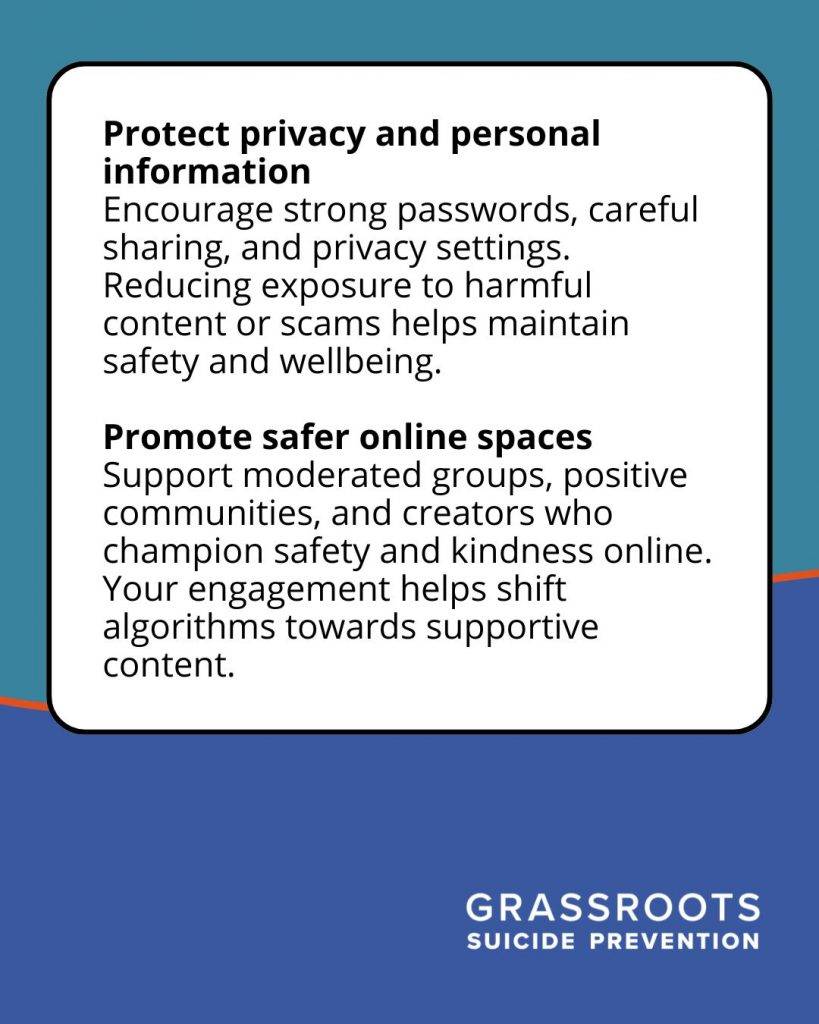
Our guidance within the Youth and Women’s Hubs offers practical advice on staying safe online and accessing support.

By fostering safer digital spaces and equipping individuals with the tools to protect themselves, we can collectively reduce risks and create a more supportive and secure online environment.

12

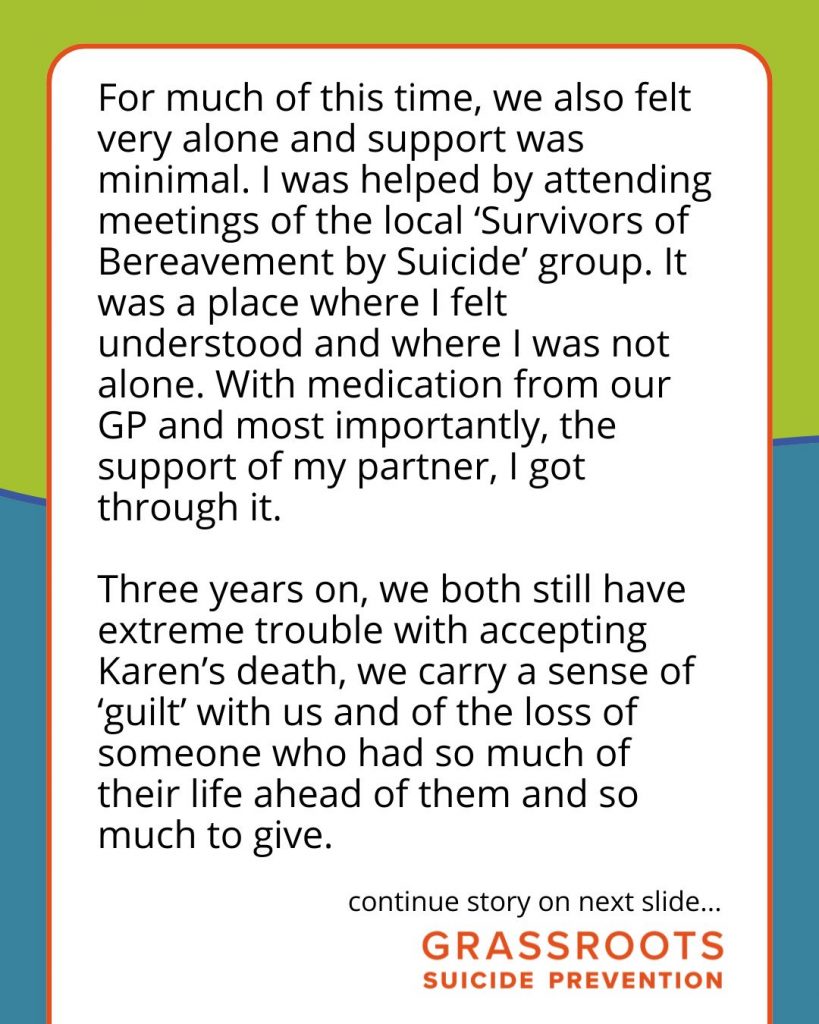
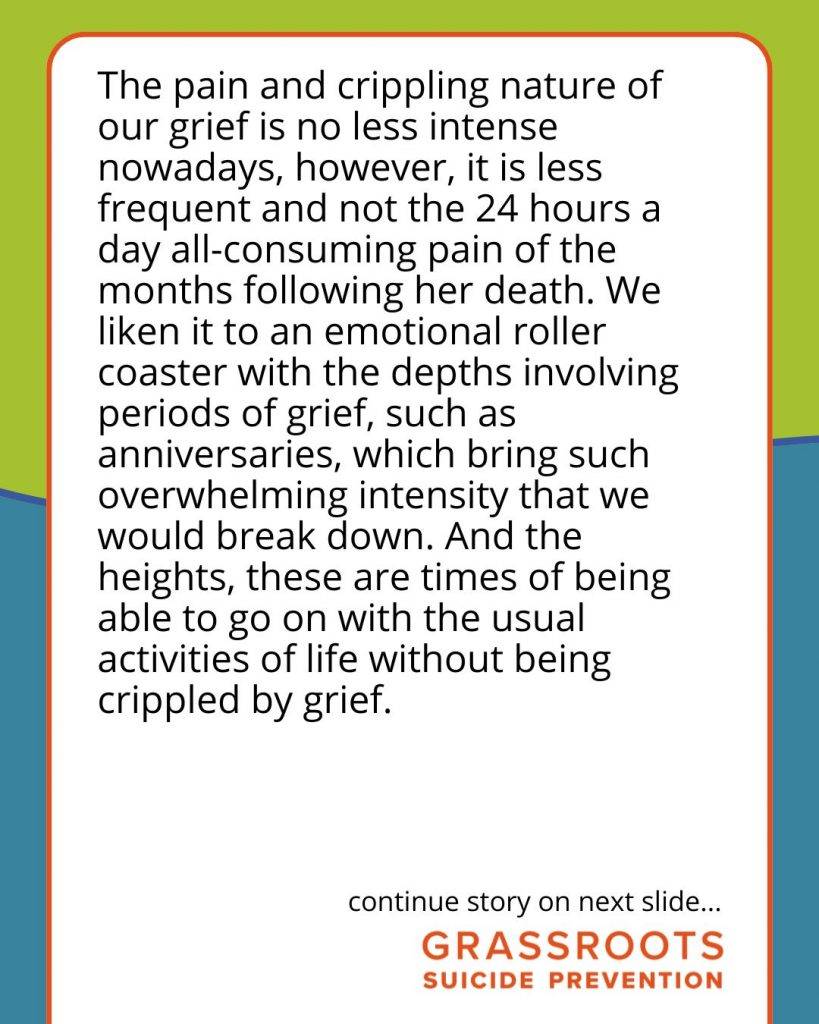
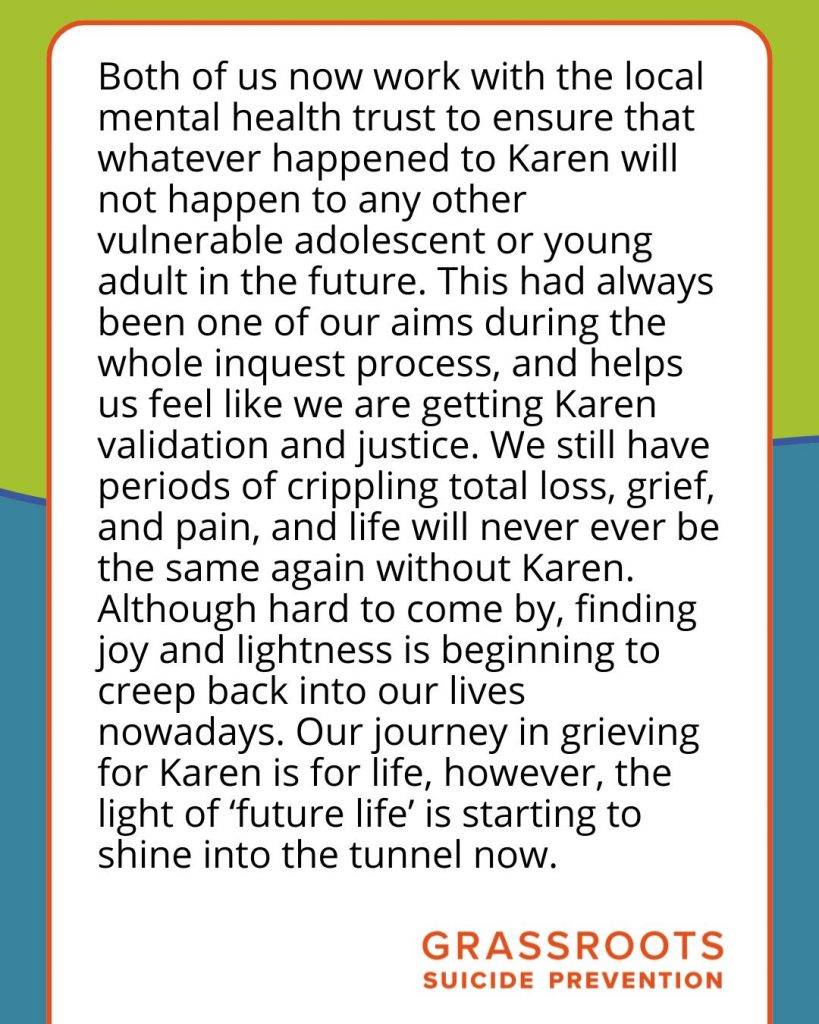
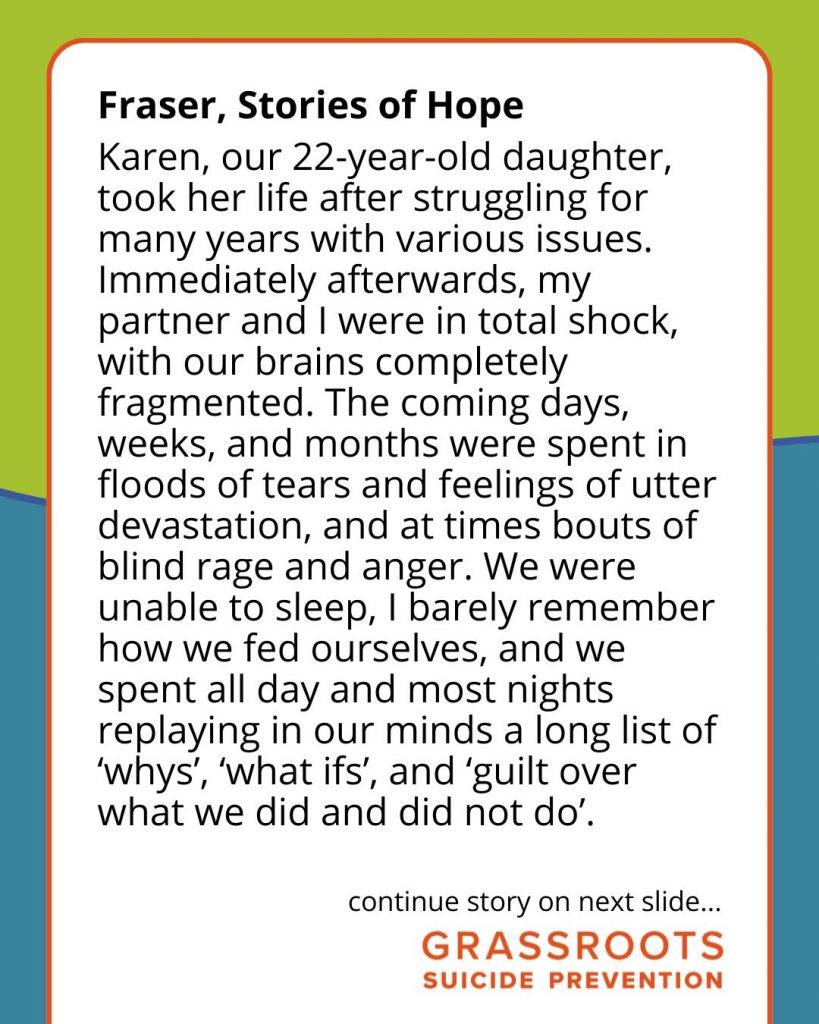
Bereaved by suicide

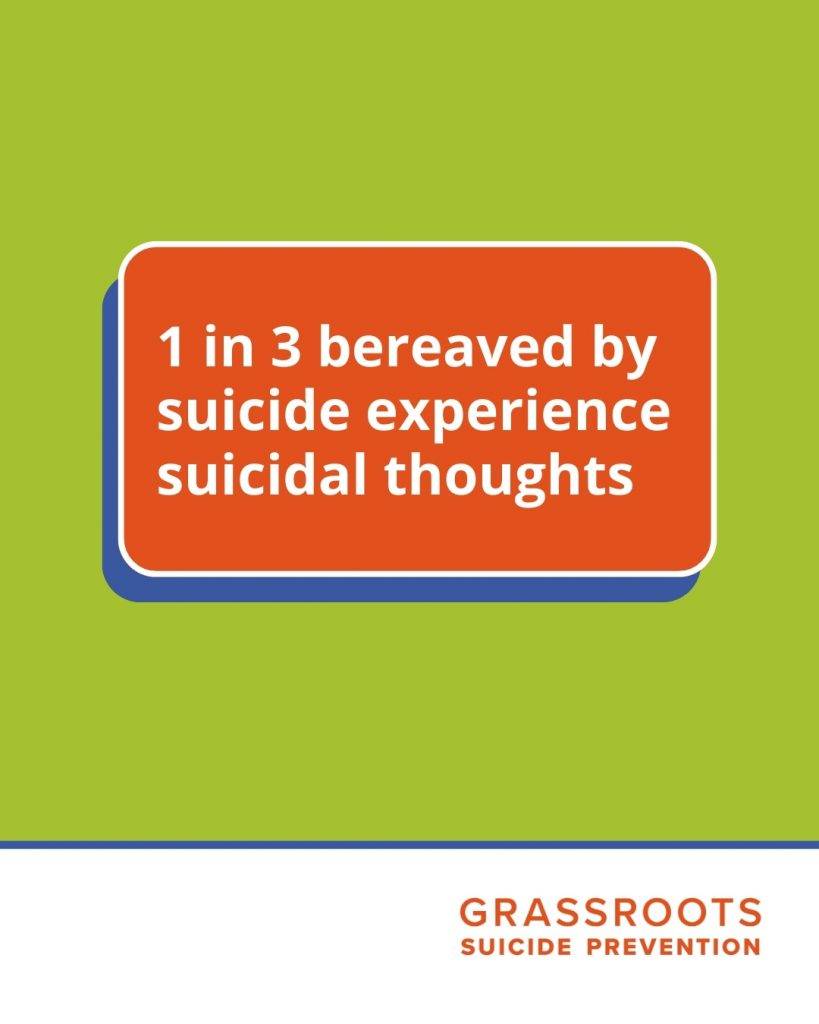
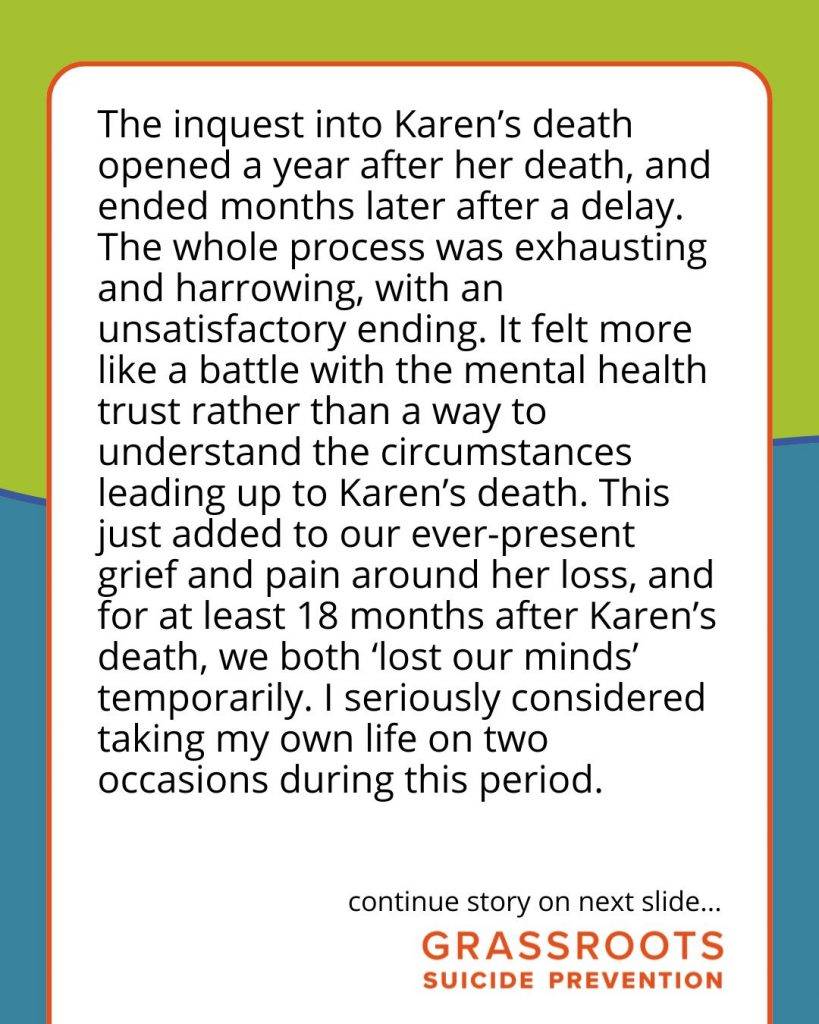
People bereaved by suicide are at a significantly higher risk of suicide themselves, experiencing a complex trauma that often leads to suicidal thoughts.

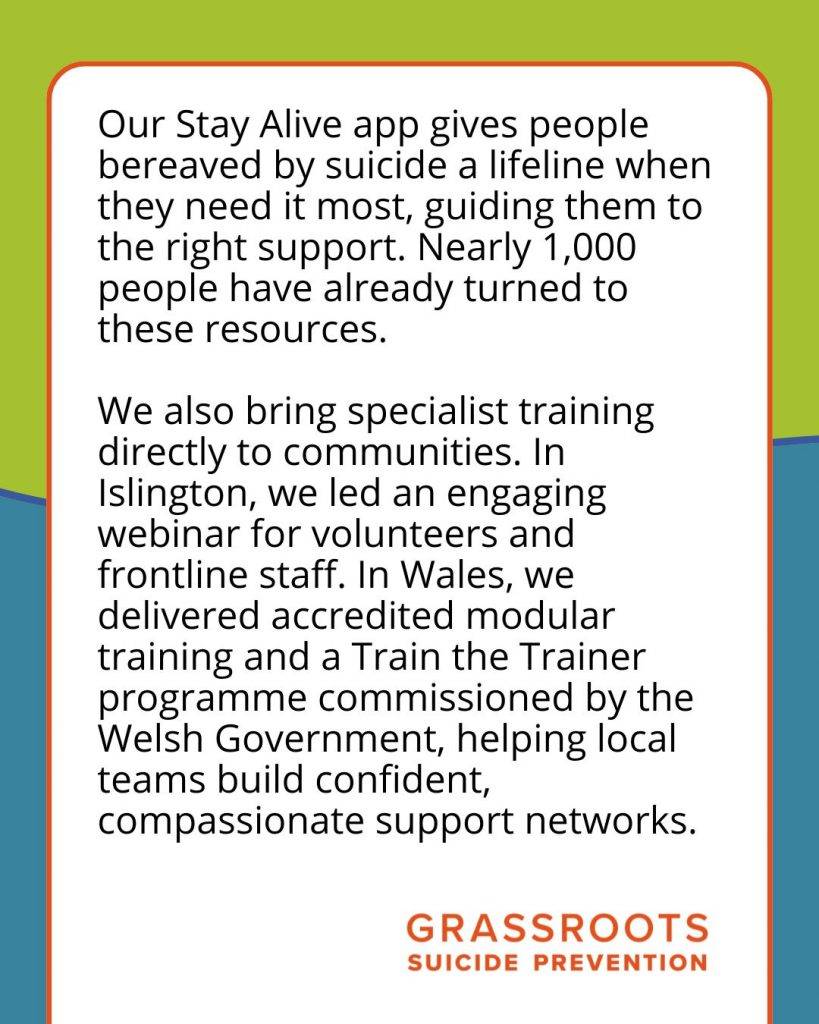
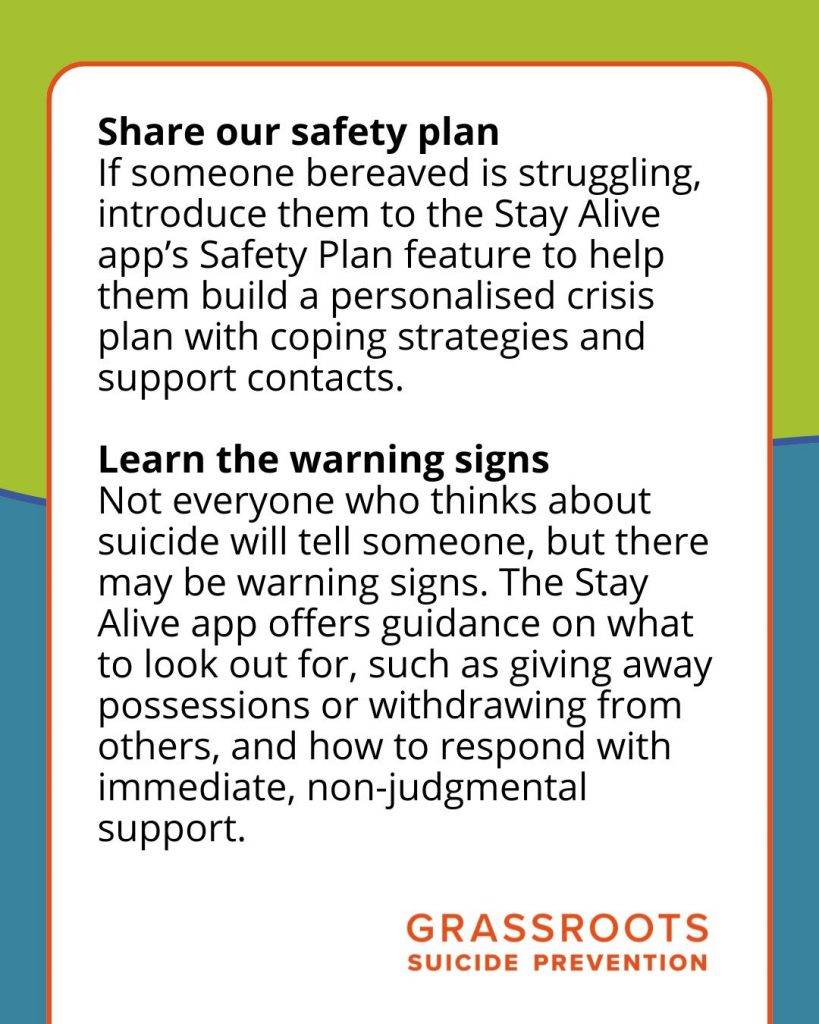
We provide training and resources such as the Stay Alive app for those bereaved by suicide and for those supporting them, helping communities respond with understanding and care.

By providing guidance, peer support, and practical coping tools, we help people bereaved by suicide navigate loss and reduce the risk of further harm.

Share this page:

Resources

Suicide is one of the leading causes of death for women under 35 in the UK – https://researchbriefings.files.parliament.uk/documents/CBP-7749/CBP-7749.pdf

14 men die by suicide each day – https://menandboys.org.uk/key-facts-male-suicide25/

In the UK, we lose five young people every single day to suicide, the leading cause of death for those under 35 – https://www.papyrus-uk.org/latest-statistics/

In the UK 1 in 5 LGBTQ+ young people have attempted suicide – https://www.thetrevorproject.org/survey-international/assets/static/2024_UK_National_Survey_EN.pdf

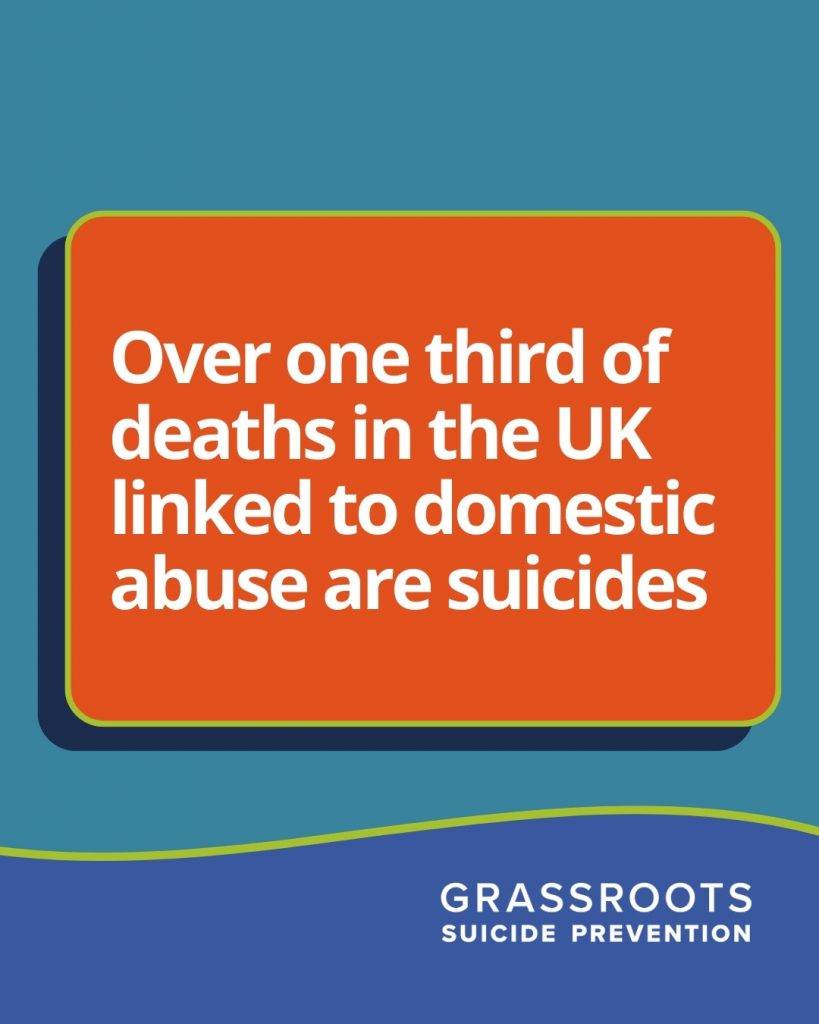
Over one third of deaths in the UK linked to domestic abuse are suicides – https://news.npcc.police.uk/releases/report-reveals-scale-of-domestic-homicide-and-suicides-by-victims-of-domestic-abuse

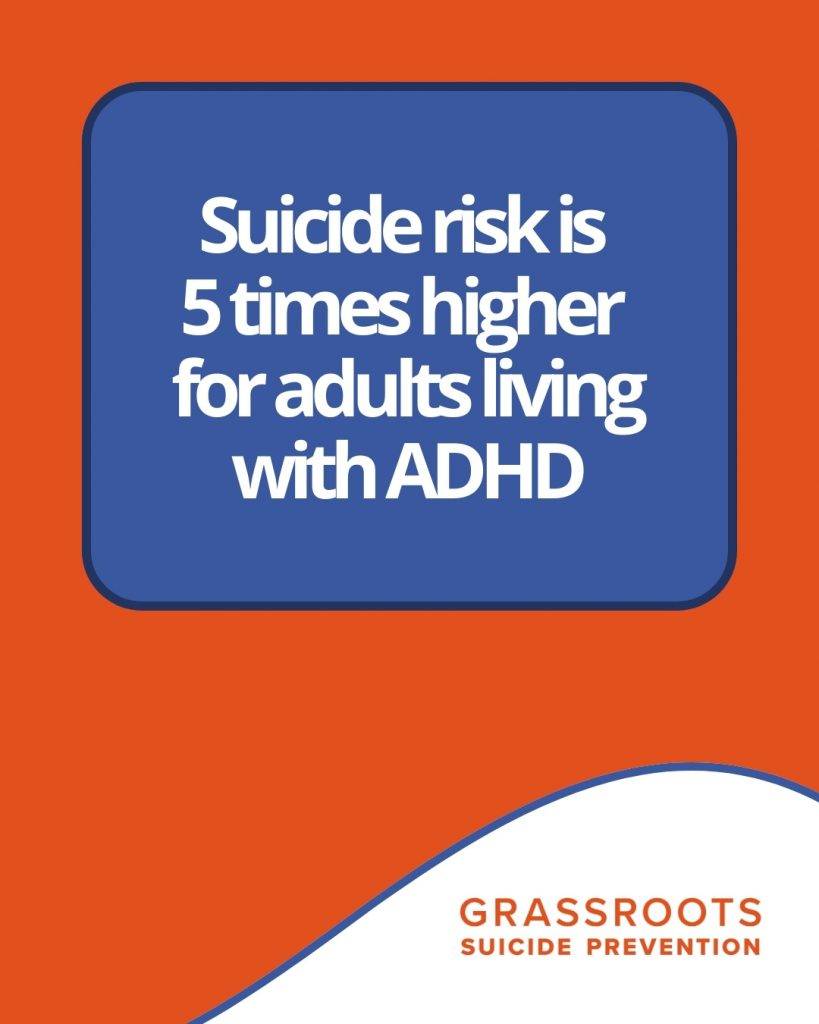
Suicide risk is 5 times higher for adults living with ADHD – Balazs J, Kereszteny A. Attention-deficit/hyperactivity disorder and suicide: A systematic review. World J Psychiatry. 2017 Mar 22;7(1):44-59.

Veterans under 25 face 4 times higher risk of suicide than their peers – https://www.gov.uk/government/news/new-figures-provide-latest-data-on-veterans-suicide

1 in 3 carers with poor mental health have had thoughts of self-harm or suicide, and nearly 40% aren’t getting the support they need – https://www.carersuk.org/media/rjknz2jt/state-of-caring-mental-health-and-social-care-feb-2025.pdf

Older adults, aged 65 and over, make up nearly 15% of all suspected suicides in England – https://www.gov.uk/government/statistics/near-to-real-time-suspected-suicide-surveillance-for-england-data-to-april-2025/near-to-real-time-suspected-suicide-surveillance-nrtsss-for-england-data-to-april-2025

13% of deaths among people experiencing homelessness are due to suicide – https://homeless.org.uk/news/tomorrow-is-too-late-suicide-prevention-support-for-people-with-no-fixed-address/

In the UK 68% of internet users report encountering at least one form of online harm – https://www.ofcom.org.uk/siteassets/resources/documents/research-and-data/online-research/online-nation/2024/online-nation-2024-report.pdf?_bhlid=ca05028c9fe07a6f729c617cb5ce4e9f92181a60&v=386238&

1 in 3 bereaved by suicide experience suicidal thoughts – https://pmc.ncbi.nlm.nih.gov/articles/PMC9790485/

Did you know 1 in 4 people will have suicidal thoughts at some point in their lives?
Donate today and help us save more lives from suicide.